When Are Banks Required to Refund Scam Transfers? Victim Rights (2026)
A detailed guide explaining when banks are legally required to refund scam transfers, how fraud investigations work, and what victim rights apply under modern banking regulations in 2026.

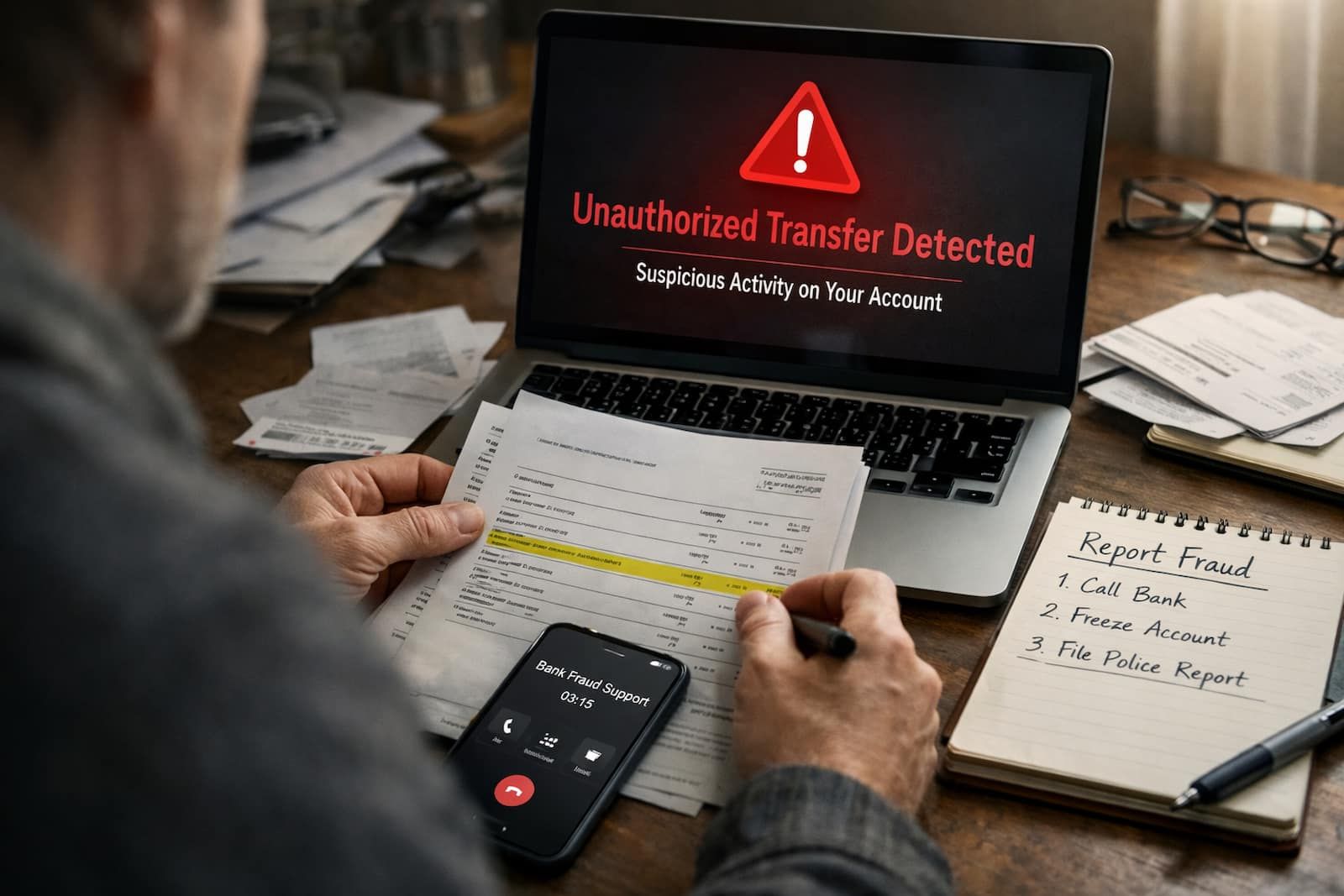
TL;DR
Banks refund scam transfers when the payment is unauthorized, when bank errors exist, or when local reimbursement rules apply. Authorized scams are harder. Evidence, speed, and escalation matter. This guide maps refund duties by region and rail and gives a 24-hour action plan.
Banks are required to refund scam transfers mainly when the transfer is unauthorized under local law, when the bank failed required security or dispute handling steps, or when a specific reimbursement regime applies. For authorized push payment scams, refunds depend on jurisdiction rules, bank conduct, and evidence. Timing and documentation change outcomes.
The Bank Script vs The Rules
Banks use one sentence to shut victims down. Regulators use ten pages to define what that sentence is allowed to hide.
We are answering one question only. When are banks required to refund scam transfers in 2026.
First, a jurisdiction reality check. Refund duties are not global. The US has one set of rules. The UK has another. Canada, Australia, and New Zealand have their own complaint and ombuds pathways. A scammer does not care about borders. The refund rules do.
Criminals move fast because bank processes move slow.
“Please wait 10 business days” is a gift basket for thieves.
Treat the first 24 hours as a rescue window, not a customer service conversation.
Banks Required to Refund Scam Transfers: The 2026 Triggers
Most refund duties trigger from “unauthorized,” “bank error,” or “reimbursement regime.”
Snippet-ready rule:
If the transfer was unauthorized, then the bank generally has a duty to investigate and refund under local consumer protections. If the transfer was authorized, then refund duty is harder and shifts toward bank conduct, reimbursement schemes, and complaint escalation.
The con is engineered to turn fraud into “permission.”
The scammer wants your consent like a parasite wants a signature.
Your job is to break the false story that “authorized” means “fair.”
Bank Reality Block: What Banks Can Actually Do by Rail
Reversibility is not a moral question. It is a rail and timing question.
| Rail | Typical reversibility | What banks can attempt | Evidence burden |
|---|---|---|---|
| Wire transfer | Low after release | Recall request, SWIFT message, beneficiary bank hold | High and time critical |
| Domestic bank transfer | Medium early, low later | Return request, fraud report, account freeze attempt | Medium |
| Faster Payments or NPP style | Low by design | Fraud claim, mule account trace, reimbursement pathway | Medium to high |
| Zelle style push payments | Low, often instant | Dispute and reimbursement review, network reports | High for authorized scams |
“Instant” is not innovation. It is a theft accelerator.
Fast payments, slow refunds. What a coincidence.
Your first message to the bank must include the rail and the timestamp. Not your emotions. Not a story.
United States (US): Where Refund Duties Come From
In the US, the strongest refund duties usually come from Regulation E and the Electronic Fund Transfer Act for unauthorized electronic transfers.
For scam transfers, US outcomes often split like this.
- Unauthorized: stronger consumer protections, investigation duties, and refund timelines.
- Authorized under deception: weaker legal guarantees, more policy discretion, and more variance across banks.
Regulator and enforcement references for context:
- CFPB consumer financial protection and supervision.
- Federal Reserve publishes the Regulation E framework.
Scammers often steer victims toward transfers because card disputes typically have clearer dispute mechanisms.
Scammers avoid chargebacks like roaches avoid daylight.
Phrase the dispute in the language of unauthorized access when it is true, and do not let a call center relabel it for convenience.
United Kingdom (UK): APP Reimbursement Reality
The UK has specific focus on Authorized Push Payment scams and reimbursement expectations, with oversight and dispute pathways.
Relevant entities:
- Financial Conduct Authority (FCA) for conduct expectations.
- Payment Systems Regulator (PSR) for payment system rules and policy direction.
- Financial Ombudsman Service (FOS) for complaints.
If you were tricked into sending a Faster Payments transfer, the fight is often about whether the bank met required standards, what warnings existed, and whether reimbursement rules apply to the bank and the transaction type. Outcomes are fact-specific and not guaranteed.
UK scammers lean on social engineering plus urgency because the rail is fast.
The scammer calendar has one holiday called “panic.”
Document what warnings were shown, what the bank blocked, and what the bank allowed.
Canada: Complaint Path and Evidence Weight
Canada often routes consumer outcomes through bank complaint steps and ombuds handling, especially for disputes that sit outside clean unauthorized definitions.
Relevant entities:
- FCAC for consumer protection supervision and complaint handling expectations.
- FINTRAC for AML intelligence context.
Criminals love vague processes because vague processes create delay.
“We will review” is not a control. It is a stall.
Ask for the bank complaint reference number, the next escalation level, and the expected timeline in writing.
Australia: IDR, AFCA, and Blunt Time Pressure
In Australia, complaint resolution pathways and external dispute resolution can matter as much as the first line bank response.
Relevant entities:
- ASIC for conduct and consumer focus.
- AUSTRAC for AML framework context.
- AFCA for external dispute resolution.
A bank that delays the case may also delay the freeze request.
Delay is the scammer best friend and the system keeps inviting it.
When internal dispute resolution stalls, move fast to the next formal step and keep your evidence pack clean.
New Zealand: Escalation and the “Prove It” Trap
NZ outcomes depend heavily on bank process, documentation, and formal complaint escalation.
Relevant entities:
- Reserve Bank of New Zealand for system oversight context.
- New Zealand Commerce Commission for broader consumer enforcement context.
The “prove it” trap is designed to exhaust victims into silence.
Bureaucracy is not neutral when money is moving.
Use timestamped artifacts and written logs. Memory does not win disputes
DV Evidence Pack (What To Collect In 30 Minutes)
Evidence quality changes refund odds because it changes internal fraud triage.
Structured list suitable for extraction:
- Transfer receipt or confirmation page screenshot
- Transaction ID, time, date, and amount
- Payee name, account identifier, and any reference text
- Chat logs, emails, and call logs with the scammer
- Any bank warnings shown, including screenshots
- Any device or account takeover signals, including new payees or new devices
- Police report reference number if filed
- A single timeline paragraph written in neutral language
Scammers want victims to delete messages. Evidence is the only thing that does not lie.
The scammer fear is not police. It is screenshots.
Your evidence pack should fit in one folder and one page summary.
Two Micro Scenarios With Numbers
Scenario 1: Consumer APP transfer and the timing cliff
The first hour is different from the tenth hour.
A victim sends $3,200 to a fake bank support agent using an instant push payment rail. At minute 12, the victim realizes the scam and calls the bank.
- If the receiving account is flagged as a mule and the beneficiary bank can place a hold, recovery odds are higher.
- If the money is withdrawn or forwarded, reversibility drops.
The fake agent script exists to buy criminals 20 minutes.
The scammer business model is “stall then sprint.”
Call the bank fraud team, not general support. Ask for a recall or hold attempt immediately.
Scenario 2: SMB invoice fraud and cash flow damage
Refund is not the only cost. Time is cost.
An SMB pays a fake supplier invoice of $18,750 by bank transfer. Payroll is due in 5 days. The bank investigates for 20 business days.
During the dispute, the SMB spends:
- 8 hours owner time at $120 per hour = $960
- 6 hours finance time at $45 per hour = $270
- Short-term credit line interest at 18 percent APR on $18,750 for 30 days ≈ $281
Total visible cost ≈ $1,511 before any refund decision.
Invoice fraud attacks operations, not just money.
Criminals steal cash and then sell you stress.
Document business impact and request expedited handling when cash flow risk is real.
Cost Lens Table: What Banks Do Not Pay For
Even when banks refund principal, victims often eat the side costs.
| Cost item | Typical who pays | Simple math example |
|---|---|---|
| Time spent gathering evidence | Victim | 6 hours at $60 per hour = $360 |
| Overdraft and late fees | Victim unless waived | $35 fee x 3 = $105 |
| Bridge financing | Victim or business | $10,000 at 20 percent APR for 45 days ≈ $246 |
| Identity recovery time | Victim | Credit freeze setup plus follow-ups = 2 to 4 hours |
The scammer damages your calendar to damage your bank balance.
Fraud is theft plus admin work. How generous.
Ask the bank to waive fees and interest tied to the disputed event. Put that request in writing.
Escalation Ladder With Deadlines
Escalation works when it is structured and time bound.
- Level 1: Fraud report filed within 2 hours.
- Level 2: Written dispute within 24 hours with the DV Evidence Pack attached.
- Level 3: Formal complaint within 5 business days if the bank stalls.
- Level 4: External dispute or ombuds as soon as eligibility triggers.
- Level 5: Legal counsel review when material loss, clear misconduct, or repeated refusal exists.
Stalling scripts are designed to make victims miss complaint windows.
The scammer clock is faster than your bank queue.
Put dates on every step. If there is no deadline, the case becomes wallpaper.
Litigation Exposure
Some cases cross from “bad luck” into “process failure.”
Litigation risk can arise when there is evidence of bank negligence, security failures, misapplied dispute rules, misleading assurances, or ignored red flags. This is jurisdiction-specific. It is also fact-specific. A refund is not guaranteed. The decision to seek legal advice is usually justified when losses are large, internal escalation is exhausted, and documentation shows a clear breach of duty.
Do not threaten lawsuits on day one. Build the record first.
Psychology Neutralization: How Scammers Hijack Decisions
Scams exploit predictable cognitive shortcuts.
Scammers use urgency, authority impersonation, and isolation to force a fast payment. The goal is to stop verification. It is not to persuade. It is to pressure.
The scammer cannot win a slow conversation.
The con collapses under one calm question.
Any request that blocks verification is a fraud signal. Treat it like smoke in a building.
Prevention Difference: Individual vs SMB
The best prevention is different because the failure mode is different.
- Individuals: lock down account access, enable transaction alerts, verify support numbers independently, and freeze credit when identity theft risk exists.
- SMBs: add payment approval controls, vendor bank detail change verification, dual approval for transfers, and reconciliation checks.
Criminals target SMBs because one fake invoice can beat a month of sales.
Scammers do not want your trust. They want your workflow.
Build one friction step into payments. Criminals hate friction.
For wire transfers, the recovery reality is brutal and timing-driven. Use the step-by-step guide on wire transfer scam recovery and when reversal is possible to understand recalls, holds, and why many attempts fail.
For ordinary bank transfers, your evidence and escalation structure does more work than another angry call. Use the bank transfer scam recovery checklist and investigation timelines to run the first week like a case file.
If the scam involved a Zelle style push payment, do not improvise the refund rules. Use the 2026 Zelle scam reimbursement law breakdown to map the dispute path.
FAQ
Are banks required to refund authorized scam transfers?
Sometimes. It depends on jurisdiction reimbursement rules, bank conduct, and evidence. “Authorized” makes refunds harder, not impossible.
How long do bank scam investigations take?
It varies by institution and rail. Expect days to weeks. Faster reporting and clean evidence can shorten triage.
What evidence increases refund odds the most?
Transaction IDs, timestamps, screenshots of warnings, and a neutral timeline. Emotion does not replace artifacts.
Can a bank reverse a wire transfer scam?
Only sometimes and usually only quickly. A recall request can fail if funds are withdrawn or moved.
Should victims file a police report?
Yes when safe and practical. It creates a reference number and a formal record that can support escalation.
What if the bank says the payment was authorized and closes the case?
Escalate in writing. Ask for the decision rationale, the dispute policy section used, and the next complaint level.
Does cross-border routing change refund chances?
Yes. It adds jurisdictions, banks, and compliance checks. It can reduce speed and increase the evidence burden.
Regulatory Citation Placeholders
- US: Consumer Financial Protection Bureau, Regulation E guidance
- UK: Financial Conduct Authority, Payment Systems Regulator, Financial Ombudsman Service
- Canada: Financial Consumer Agency of Canada complaint handling guidance
- Australia: Australian Financial Complaints Authority guidance
- New Zealand: Reserve Bank of New Zealand publications
Reviewed for Accuracy
Reviewed for accuracy on 17 March 2026.
Disclaimer
This article is educational information, not legal advice. Rules vary by jurisdiction, bank policy, and the exact facts. Recovery depends on timing, documentation, and bank cooperation.
Scammers love “instant” because it outruns accountability.
Act fast, save evidence, escalate on paper.