Can Banks Reverse Wire Transfer Scams? Recovery Rules 2026
Wire transfer scams move money fast and recovery is difficult. This guide explains when banks can reverse fraudulent transfers, the recovery rules in 2026, and the actions victims must take immediately to improve the chances of getting funds back.

TL;DR
Banks can sometimes stop or recall a scam wire, but only if timing, recipient bank cooperation, and documentation line up. This guide gives a 24-hour playbook, escalation ladder, and realistic recovery rules for 2026.
Can banks reverse wire transfer scams? Sometimes, but it is not automatic. If the wire has not settled, your bank may be able to cancel it or stop release. After settlement, recovery depends on the recipient bank placing a hold, locating remaining funds, and responding to law enforcement or court requests. Timing and documentation drive outcomes in 2026.
In 2026, the most dangerous lie in wire fraud is simple. “The bank will fix it.”
The second most dangerous lie is also simple. “Wires are final, nothing can be done.”
Here is the reality. When people ask whether can banks reverse wire transfer scams, the honest answer is “sometimes,” and the mechanism matters. If the wire has not fully released or settled, a bank may be able to cancel it. After settlement, a bank can request a recall, but the receiving bank has to cooperate and the money has to still exist.
Rules and remedies differ across the United States, the United Kingdom, Canada, Australia, and New Zealand. Bank policy can also be stricter than the law. Recovery depends on timing, documentation, and bank cooperation.
A wire recall is a bank-to-bank request asking the receiving bank to return funds. It is not a guaranteed undo button. It can work only if funds are still available or the recipient bank can place a hold before withdrawals drain the account.
The Bank Reality Block: what “reverse” can mean
There are three situations people describe as “reversing a wire.” Only one is close to a true reversal.
- Cancel before the wire is released or settled. This is the best case. It is a stop order inside your own bank.
- Recall after settlement. Your bank asks the recipient bank to return the funds. The recipient bank can refuse, delay, or report that the funds are gone.
- Recovery by force. Law enforcement requests, court orders, or civil action that compels information or freezes funds if they are still reachable.
Hard Truth: If the scammer controls the recipient account, every minute is a withdrawal opportunity.
Scammers love “tomorrow.” Banks love “process.”
Practical takeaway: If the bank says “we will try,” treat that as “you must document and escalate.”
Can banks reverse wire transfer scams after they are sent?
After a wire is sent, “reverse” usually means “recall.” A recall is a request, not a command.
What happens next is operational, not emotional.
- Your bank sends a recall request with wire trace identifiers.
- The recipient bank checks whether funds remain.
- The recipient bank may place a hold, contact the account holder, or refuse based on policy and available evidence.
- If funds are already withdrawn, the bank may still be able to flag the account, but recovery becomes harder.
Fraudsters are not “beneficiaries.” They are thieves with bank access.
The scenario fork that decides everything
Before anyone can help, classify the event. Do not debate feelings. Debate facts.
Fork A: Was the wire authorized?
- Authorized but induced by deception: You approved the wire after a scam. Common in BEC invoice fraud and real estate deposit scams.
- Unauthorized: Someone accessed your account and sent a wire without permission.
Why this matters: In many jurisdictions, unauthorized transaction rules can be stronger than outcomes for authorized scam payments. Banks investigate both, but the legal lane changes.
Fork B: Was it a “wrong recipient” error?
- You sent to the wrong account number, the wrong beneficiary, or the wrong bank details.
Errors can be recoverable if the recipient bank can confirm the misdirection and funds remain. It can also become a civil dispute if the recipient refuses to return funds.
The first 15 minutes: the window scammers fear
Treat wire fraud like a fire alarm. Loud. Immediate. Recorded.
What to do, in order
- Call your bank and say this sentence: “This is suspected wire fraud. I need an urgent wire recall and a recipient bank hold request.”
- Ask for the wire team, not your branch. Branch staff often cannot reach the right queue fast.
- Get the reference numbers: wire trace reference, IMAD or OMAD where relevant, and SWIFT UETR for cross-border wires.
- Send a written follow-up within one hour. Email or secure message. Restate the request. Attach proof.
Screenshot checklist:
- The confirmation screen of the wire
- Beneficiary name, account, bank, and SWIFT or routing details
- Any emails, invoices, and payment instructions
- Call logs and timestamps
- Any chat messages and attachments
Read This Twice: If you cannot prove the timeline, you cannot control the narrative.
DV Evidence Pack: the documents that move a bank faster
Banks do not run on outrage. Banks run on risk, traceability, and audit trails.
Build this pack and send it.
DV Evidence Pack (minimum viable)
- A one-page timeline with timestamps and amounts
- Payment instruction source material, including email headers when relevant
- Proof of impersonation if present, including lookalike domains and altered banking details
- The beneficiary bank details exactly as used
- For businesses, the internal approval trail, including who approved, how, and when
Operational note: Label every file with date and time. Banks triage. Chaos loses.
The scam wins when your evidence looks like a junk drawer.
Recovery rules by region in 2026: what changes and what does not
This is not a global law guide. This is a recovery mechanics guide. Regulators still matter because they influence complaint routes and escalation expectations.
United States
Relevant entities include the Federal Reserve rail (Fedwire) and complaint and reporting bodies such as CFPB, FTC, and FBI IC3. Wire recovery often becomes a coordination problem between your bank, the recipient bank, and law enforcement. If account takeover occurred, push the bank to investigate authentication failures and access logs.
United Kingdom
Relevant entities include the FCA and the Payment Systems Regulator. UK scam protections often focus on faster-payment style scams. International wires and bank wires can follow different operational paths. Treat speed and documentation as the controllable levers.
Canada
Relevant entities include FCAC and FINTRAC. Banks can coordinate recall attempts, but reimbursement outcomes are fact-specific and often bank-policy driven. Use written escalation and clear incident documentation.
Australia
Relevant entities include ACCC Scamwatch and ASIC scam alerts. Reporting and bank coordination matter, but outcomes depend heavily on timing and the recipient bank response.
New Zealand
Relevant entities include CERT NZ and FMA warnings. Reporting plus recipient-bank hold requests are central. Treat it as a time race.
Cross-border limitation note: International wires add time zones, intermediary banks, and messaging delays. That reduces the hold window even when everyone moves quickly.
The cost lens: recovery has a price tag, even when you win
Scams steal money. They also steal time. For businesses, time is payroll.
| Cost line | Simple math example | Why it matters |
|---|---|---|
| Staff hours | 6 hours x 3 people x $45/hr = $810 | Evidence collection, calls, statements, access resets |
| Bank fees and trace fees | $25 to $75 | Small alone, meaningful when repeated |
| Legal consult threshold | $350/hr x 2 hours = $700 | Worth it above a defined loss amount |
| Operational disruption | Delayed vendor payment plus penalties | Secondary losses are real losses |
Cost Shock: A $12,000 wire scam can become a $15,000 incident.
Practical takeaway: For SMBs, set a “legal consult trigger.” Example: any fraud wire above $10,000, or any repeat event within 90 days.
Comparison table: what can work at each stage
This is not a vendor roundup. It compares recovery approaches.
| Stage | What banks can do | What you must do | Failure mode scammers exploit |
|---|---|---|---|
| T+0 to T+15 minutes | Cancel or stop release, flag fraud, start recall request | Use fraud language, demand the wire team, capture references | You call the branch and get parked |
| T+15 minutes to T+24 hours | Send recall request, request a hold, reach recipient bank | Send DV Evidence Pack, file reports, escalate in writing | “We will update you” buys the scammer time |
| Day 2 to Day 7 | Trace, negotiate return, respond to law enforcement requests | Formal complaint routes, written follow-ups with timestamps | Your timeline collapses because you did not document |
| Day 8 to Day 30 | Limited recovery, possible holds if funds reappear | Consider civil steps, identity monitoring, containment | Recovery scammers arrive pretending to help |
“Just wait” is a scammer productivity hack.
The 24-hour rapid action plan (communication-first)
This is the checklist used while adrenaline tries to destroy accuracy.
Hour 0 to 2
- Call the bank. Trigger recall and request a recipient bank hold.
- Capture wire references and the bank agent name.
- Send written confirmation with the DV Evidence Pack.
Hour 2 to 6
- File a report through the relevant national fraud or scam route.
- If business email compromise is involved, secure email and reset credentials.
- Alert counterparties so the scam does not repeat.
Hour 6 to 24
- Ask your bank for status in writing.
- Ask whether the recipient bank confirmed funds are held or withdrawn.
- Start identity protection steps if personal data was shared.
Operational example micro-scenario 1:
A buyer wires $48,500 for a “property deposit” after an email changes banking details. The wire is sent at 10:12. The buyer calls at 10:27. The bank stops release at 10:31. Outcome: higher chance of cancellation because settlement had not completed.
Operational example micro-scenario 2:
An accounts payable team wires $19,800 at 3:04 pm to a mule account from spoofed vendor instructions. Fraud is discovered next morning at 9:10 am. The bank requests a recall. The recipient bank reports funds were withdrawn overnight. Outcome: recovery depends on remaining balance and whether any hold or later inbound funds become reachable.
Escalation ladder: what to do when the bank stalls
Banks stall without saying “stall.” They deliver non-answers.
Timeline ladder
- Day 0: Recall request and recipient bank hold request. Written confirmation.
- Day 1: Request trace status and the recipient bank response.
- Day 2: Use the bank complaint route. Demand written expectations.
- Day 3 to 7: Escalate to external complaint bodies where available. Provide the DV Evidence Pack.
- Day 8 to Day 30: Consider legal counsel for preservation, disclosure requests, or civil recovery steps.
A useful script:
“I am requesting written confirmation of the recall request, the recipient bank contact attempt, and the current status of funds. Please provide the time and date each step occurred.”
If they cannot timestamp it, they did not do it.
Litigation exposure and liability reality (especially for SMBs)
Wire fraud can trigger contractual breaches, privacy obligations, and negligence claims.
If a business sent a wire due to BEC, the questions become specific.
- Were there approval controls for banking detail changes?
- Was callback verification used?
- Did staff use known-good contact details, not email replies?
If a client or vendor was harmed, legal exposure may follow even when the scammer was the criminal actor. Document controls and incident response steps immediately.
Psychology neutralization: how scammers push the timing trap
Scammers win with three levers.
- Urgency: “Pay now or lose the deal.”
- Authority: “This came from your lawyer, your CEO, your agent.”
- Isolation: “Do not call anyone. Just follow the instructions.”
We neutralize this by enforcing one rule.
If the payment instruction changed, verification must change.
If payment details change, then verify by a second channel using a known-good number before any wire is sent.
A fake CEO loves a silent inbox.
Prevention difference: individual versus SMB
Individuals need fewer controls. They need stricter habits.
Individuals
- Never wire based on email only.
- Use a known phone number for verification.
- For real estate, verify deposit instructions with the title company by phone.
SMBs
- Add a “bank details change” policy.
- Enforce dual approval for first-time wires.
- Restrict access to vendor banking details.
Recovery scam warning: the second scam arrives on schedule
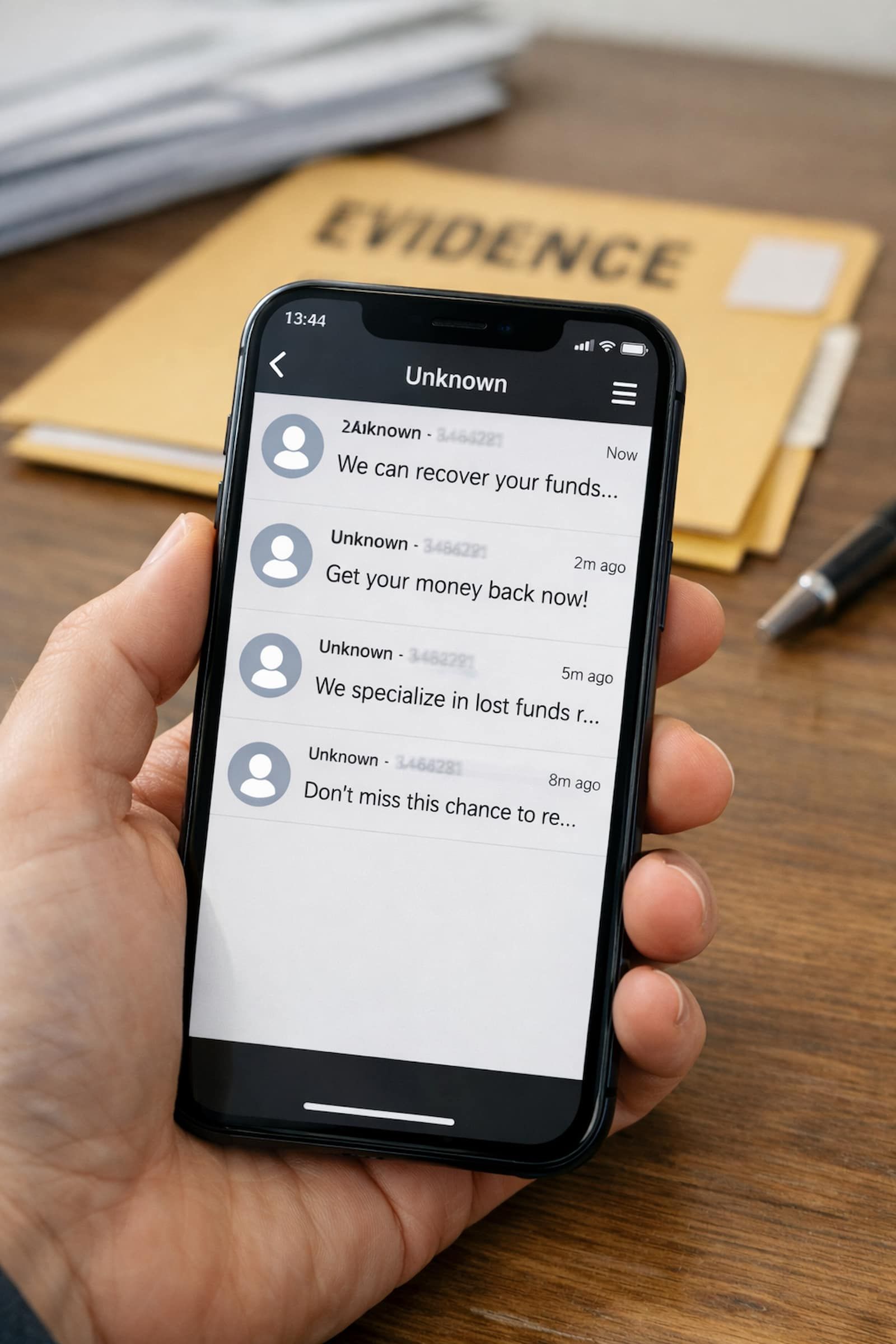
After a wire scam, victims often get contacted by “recovery agents.” They promise chargebacks on wires, guaranteed reversals, or “blockchain tracing” even when the transfer was a bank wire.
Evidence-led rule: If someone promises guaranteed recovery, they are selling fiction, and they will invoice you for it.
Guaranteed recovery is guaranteed fraud.
FAQs
Can a bank reverse a wire transfer after it is completed?
Banks can request a recall, but after settlement there is no guaranteed reversal. Recovery depends on whether funds can be held or returned.
How long do you have to cancel a wire transfer?
Sometimes minutes. Sometimes hours. It depends on when the wire is released and settled. Treat it as immediate.
What if you wired money to the wrong account number?
Your bank can attempt a recall and ask the recipient bank to contact the recipient. If the recipient refuses to return funds, civil routes may apply.
Does reporting to the police make the bank refund you?
Not automatically. It can support holds, information requests, and documentation. It strengthens the case, but it does not force reimbursement by itself.
Are wire transfers protected like card payments?
No. Cards and some electronic transfers can have dispute and chargeback mechanisms. Wires usually have higher finality and lower reversal options.
What should you ask the bank for in writing?
Ask for confirmation of the recall request, the recipient bank contact attempt, the trace status, and any recipient bank response.
Can banks freeze the recipient account?
Banks can request a hold or freeze. The recipient bank decides based on policy, law enforcement requests, and available evidence.
What if the scam was business email compromise?
Secure email immediately, preserve headers, and document the approval trail. BEC incidents often repeat if the root access is not removed.
Should you pay a “recovery service” that contacts you?
No. Report the contact to your bank and the relevant scam reporting route. Legitimate help does not require secrecy or upfront “unlock” fees.
Disclaimer
This article is educational information, not legal advice. Banking rules, complaints processes, and recovery outcomes vary by country, bank policy, and the facts of the incident. Do not delay reporting. If you need legal advice, consult a qualified lawyer in your jurisdiction.
Reviewed for accuracy: 8 March 2026
The scammer wants your wire to feel “urgent.” Make verification feel mandatory.
Verify bank details by a second channel before you send any wire.