Top Fraud Detection Software for Small Businesses 2026
A practical 2026 buyer’s guide to fraud detection software for small businesses, covering real-world dashboards, risk scoring, chargeback prevention, integrations, pricing signals, and how to choose tools that actually fit day-to-day operations.

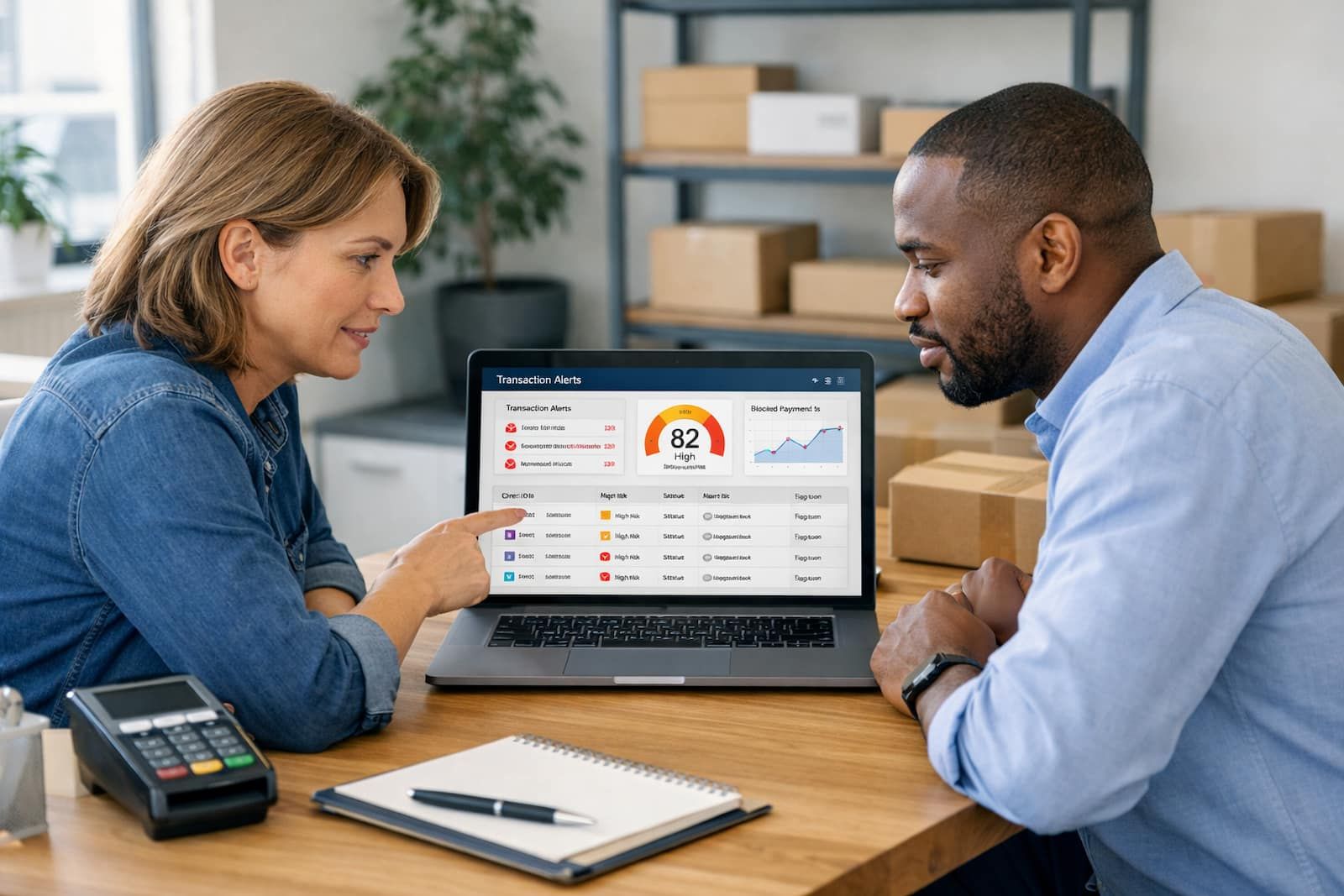
TL;DR
“Top” fraud detection software in 2026 means tools that catch card testing, account takeover, fake signups, and invoice fraud early, then make humans verify the rest. Pick for your fraud type, not your ego. No tool is a refund button. Your process is the weapon.
In 2026, fraud detection software for small businesses is not optional infrastructure—it is triage tooling. The right system spots card testing loops, credential stuffing, bot-driven account creation, and invoice impersonation before money moves. But "right" is not a brand. It is alignment: does the tool see your payment stack, does it explain risk in plain language, and can your team actually act on what it flags? Software is the sensor. Your workflow is the lock.
Introduction
Scammers love small businesses because small businesses are busy. And “busy” is just “understaffed with a credit card processor.”
Fraud in 2026 is not one monster. It is a zoo. Card testing at 3 a.m. Account takeovers that start with one leaked password. Fake supplier emails that change bank details. Refund abuse that looks like customer service. If your tool cannot catch your specific zoo animal, it is not “top.” It is décor.
How we chose (criteria)
We picked tools that do four things well for SMB reality, not enterprise cosplay:
- Stops money leaks early: card testing, bot attacks, and ATO signals before you ship, fulfill, or pay.
- Explains the “why,” not just the “what”: clear reasons you can act on, not a mysterious risk score that needs a priest.
- Works with common stacks: Shopify, WooCommerce, Stripe, Adyen, PayPal, QuickBooks, Microsoft 365, Google Workspace.
- Supports human controls: approvals, step-up verification, and audit trails for when a scammer tries to gaslight your team.
- Does not break conversion: fraud tools that block good customers are just fraud, with nicer branding.
Myth vs reality
- Myth: “If we buy a fraud tool, chargebacks stop.”
- Reality: Chargebacks are a bank process and a card network process. Your tool helps you reduce disputes and prove what happened. It cannot force a bank to side with you.
Quick shortlist (named tools)
Here are the tools worth being on your 2026 shortlist, depending on what you sell and how scammers hit you:
- Stripe Radar: simple if you live in Stripe. Fast rules. Good for card testing and checkout fraud.
- Sift: strong for ecommerce and marketplaces. Good controls and decisioning at scale.
- Riskified: built for ecommerce approvals and chargeback outcomes. Useful if you sell high risk items.
- Signifyd: ecommerce focused with guarantees for some merchants. Good for order fraud.
- Kount (Equifax): broader fraud platform with device and identity signals.
- SEON: lightweight, developer friendly, good for digital goods, accounts, and signup abuse.
- Arkose Labs: bot and abuse defense. Great when the “fraud” is automated.
- Sardine: fraud and compliance tooling for onboarding and transactions, often used in fintech style flows.
- Feedzai: powerful analytics and fraud detection, more common in larger orgs, but some SMBs use it via partners.
Comparison table (named tools)
| Tool | Best for | Primary strength | Setup complexity | Pricing model (typical) | Watch out for |
|---|---|---|---|---|---|
| Stripe Radar | Stripe-first SMBs | Rules + ML signals at checkout | Low | Usage-based / add-on | Not ideal if your stack is not Stripe |
| Sift | Ecommerce + marketplaces | Decisioning + network effects | Medium | Volume-based | Needs tuning or you will block good buyers |
| Riskified | High-risk ecommerce | Chargeback-focused approvals | Medium | Performance / per order | Guarantees have terms. Read them like a pessimist |
| Signifyd | Online retail | Order protection + scoring | Medium | Per order / subscription | Automation without review can burn you |
| Kount (Equifax) | Omnichannel fraud | Device and identity signals | Medium | Contract-based | May feel heavy for very small teams |
| SEON | Accounts + digital goods | Flexible risk signals and rules | Low–Medium | Subscription / usage | If you collect too much data, you create compliance headaches |
| Arkose Labs | Bot attacks + abuse | Stops automated fraud, not just card fraud | Medium | Contract-based | Friction can annoy real users if misconfigured |
| Sardine | Onboarding + transaction monitoring | Identity and fraud tooling for flows | Medium | Contract-based | Not plug-and-play for every SMB use case |
Best for X categories (named recommendations)
Best for ecommerce checkout fraud
Signifyd or Riskified if you need order-level decisions and you sell physical goods that scammers love to resell.
Good fit if: your losses are “goods shipped, chargeback later.”
Not a fit if: your problem is invoice fraud or payroll scams. Different animal.
Best for Stripe-based small businesses
Stripe Radar if Stripe is your payment brain.
Good fit if: you want fast rules, step-up actions, and fewer false positives.
Not a fit if: you process most revenue outside Stripe.
Best for account takeover and fake accounts
SEON for flexible risk signals and rules, and Sift when you need stronger identity and network style decisioning.
Good fit if: you see password stuffing, suspicious logins, promo abuse, and “new account” fraud.
Not a fit if: you never built basic MFA and rate limits. Tools do not replace self-respect.
Best for bot-driven card testing and abuse
Arkose Labs when the fraud is automated and persistent.
Good fit if: your logs look like a stampede and your checkout is getting hammered.
Not a fit if: your fraud is mostly human social engineering through email and invoices.
What banks will not tell you directly
Banks and processors will not say this out loud because it makes everyone uncomfortable:
- “Authorized” often means “not our problem.” If your employee clicked, approved, or sent the transfer, many rails treat it as authorized. That is not justice. That is how the rules are written.
- Chargebacks are not a sympathy contest. They are documentation, time windows, and codes.
- Your fastest refunds are internal. Meaning: you eat the loss to save the customer relationship. Fraud tools help you avoid getting there.
If your fraud tool pitch sounds like “we’ll get your money back,” keep one hand on your wallet.
Two micro-scenarios (real-world, SMB-ugly)
Micro-scenario 1: card testing turns into a chargeback storm
A scammer runs hundreds of tiny transactions to test stolen cards. The “successful” ones become bigger orders. Your team sees “sales.” Then the bank reverses everything, plus fees, plus a risk review.
A checkout-focused tool (Radar, Signifyd, Riskified) can flag velocity, mismatched signals, and risky patterns. But the real fix is also boring: rate limits, AVS/CVV checks, and refusing weird shipping patterns.
Micro-scenario 2: invoice fraud with a fake “bank change” email
A supplier email shows up: “Our bank details changed. Please update for the next payment.” It looks legit. It uses the right logo. It even includes a fake “phone number” that routes to the scammer.
No fraud tool in your checkout stack saves you here. Your control saves you: out-of-band verification using a number you already had on file, plus approvals, plus a vendor change freeze.
Implementation reality check (what tools cannot fix)
Let’s say it clearly:
- Tools do not fix panic.
- Tools do not fix weak approvals.
- Tools do not fix shared inbox chaos.
- Tools do not fix someone sending a wire because an email yelled at them.
🧱Hard Truth: Fraud software is a smoke alarm. If the building is made of gasoline, the alarm is not the problem.
Common mistakes to avoid
We do not blame victims here. We blame the parasite and the process gap.
- Buying a tool and skipping the playbook. Alerts without actions are just expensive notifications.
- Letting marketing pick the product. Fraud is not a vibe. It is math and behavior.
- Treating a risk score like a verdict. Review edge cases. Tune. Repeat.
- Ignoring refund and returns abuse. Scammers love “friendly” policies.
- Forgetting your people are the attack surface. Social engineering is still undefeated.
Detection and prevention stack (non-tool controls)
Fraud software should sit inside a stack that makes scammers miserable.
A screenshot-friendly checklist
- Turn on MFA for email, banking, payroll, and admin dashboards
- Use unique passwords and a password manager
- Require two-person approval for refunds above a threshold
- Lock vendor bank detail changes behind call-back verification
- Add login alerts and impossible travel alerts
- Set velocity limits on checkout and failed payment attempts
- Train staff on “urgent payment” and “refund now” scripts
Rapid action summary (first 24 hours)
If you suspect fraud, move fast. Scammers count on freeze.
- Contain: reset passwords, revoke sessions, lock admin accounts, pause payouts if possible.
- Preserve evidence: export logs, keep emails, save screenshots.
- Call the bank or processor: ask about recall options, disputes, and time limits.
- Notify impacted customers: short and factual. No drama.
- File reports: in the U.S., use FTC and FBI IC3. Outside the U.S., report to local cybercrime channels and your bank.
Chargebacks vs bank transfers
A chargeback is a card network dispute process. You can fight it with evidence, but the cardholder and bank have leverage.
A bank transfer (wire, ACH, Faster Payments, NPP) is closer to “money left the building.” Some transfers can be recalled. Many cannot. That is why invoice fraud is so brutal. It hits the rails that do not do do-overs.
Scammer-engineered urgency
Urgency is the scammer’s favorite seasoning. It makes bad decisions taste “necessary.”
They use:
- “This must be paid today.”
- “Your account will be suspended in 30 minutes.”
- “We already shipped. Approve the refund now.”
The goal is not speed. The goal is bypassing your verification step. Your best defense is a rule your team cannot override just because an email threw a tantrum.
⚠️Read This Twice: Any request to change bank details or rush a payment is a verification event. No exceptions. Not even for the “CEO.” Especially not for the “CEO.”
If You Remember Only One Thing: Make “verify out-of-band” the rule that no panic can override.
Individuals vs small businesses (what differs)
For individuals, prevention is often about locking identity: freezes, alerts, clean devices, and fast reporting.
For small businesses, prevention is about locking workflow: approvals, separation of duties, vendor controls, refund rules, and mailbox security. A scammer does not need your Social Security number if they can trick your accounts payable team into wiring money to “Totally Real Vendor LLC.”
And yes, this applies in the US, UK, Canada, Australia, and New Zealand. Different rails. Same scammer personality. Loud. pushy. allergic to verification.
Where internal links actually help (context, not decoration)
If your team also deals with identity misuse and repeat fraud, read credit monitoring vs identity theft protection in 2026 to stop buying the wrong kind of “protection.”
If you handle customer disputes or “I didn’t authorize this” claims, the Zelle scam reimbursement reality in 2026 is a useful reminder that rails have rules and the rules do not care about feelings.
If tax time turns your inbox into a scam magnet, identity theft protection and tax refund fraud recovery explains what paid services do versus what actually moves the needle.
Data points that should scare you into action
This is not “the future.” It is now.
- FTC data for 2024: people reported losing over $12 billion to fraud, with big losses tied to investment scams and impersonation patterns.
- FBI IC3 2023: Business Email Compromise (BEC) generated $2.9 billion in reported losses.
If you are an SMB and you think scammers only target “big companies,” congratulations. You are the perfect target.
FAQs
What is the best fraud detection software for a small business?
The best tool is the one matched to your fraud type and rails. Ecommerce needs checkout and account defense. Service businesses need invoice and payment controls. Pick a tool your team will actually configure and review weekly. If nobody owns it, it will rot.
Do fraud tools prevent chargebacks?
They can reduce chargebacks by blocking risky orders, catching card testing, and supporting better evidence. They cannot eliminate chargebacks because disputes are a bank and card network process with strict timelines. Your policy, proof, and customer communication still matter.
Can fraud software stop invoice fraud?
Not by itself. Invoice fraud is mostly social engineering and workflow weakness. You need approval rules, vendor bank change verification, and mailbox security. Tools can help with email security and anomaly detection, but the core control is human verification out-of-band.
How much should SMBs spend on fraud prevention tools?
Spend based on loss, not vibes. If fraud losses and chargeback fees are eating margin, a tool can pay for itself fast. But start with the free wins first: MFA, approvals, and vendor controls. Software is step two, not step zero.
Which setup mistake causes the most fraud loss?
Skipping the playbook. Alerts fire, nobody knows what to do, and scammers keep running. Create a simple decision tree: when to block, when to review, when to verify identity, and when to escalate. Then train it until it is muscle memory.
TL;DR
Pick fraud software based on where scammers hit you: checkout, accounts, bots, or invoices. Use a comparison table, pick a “best for,” and then build the controls tools cannot replace. Fraudsters hate two things: verification and documentation. Give them both.
Conclusion
Buy the tool if it fits. Tune it like you mean it. Then build the boring controls that ruin scams.
Because the scammer’s dream is not “your money.” It is your panic.
Disclaimer
This article is for education. It is not legal advice. It is not financial advice. If money is at risk right now, contact your bank or payment provider immediately and document everything.