Authorized Push Payment Scam Rules (2026): When Banks Must Refund Victims
Understand Authorized Push Payment (APP) scam refund rules in 2026. Learn when banks are legally required to reimburse victims, what affects liability, and how to file a strong refund claim.

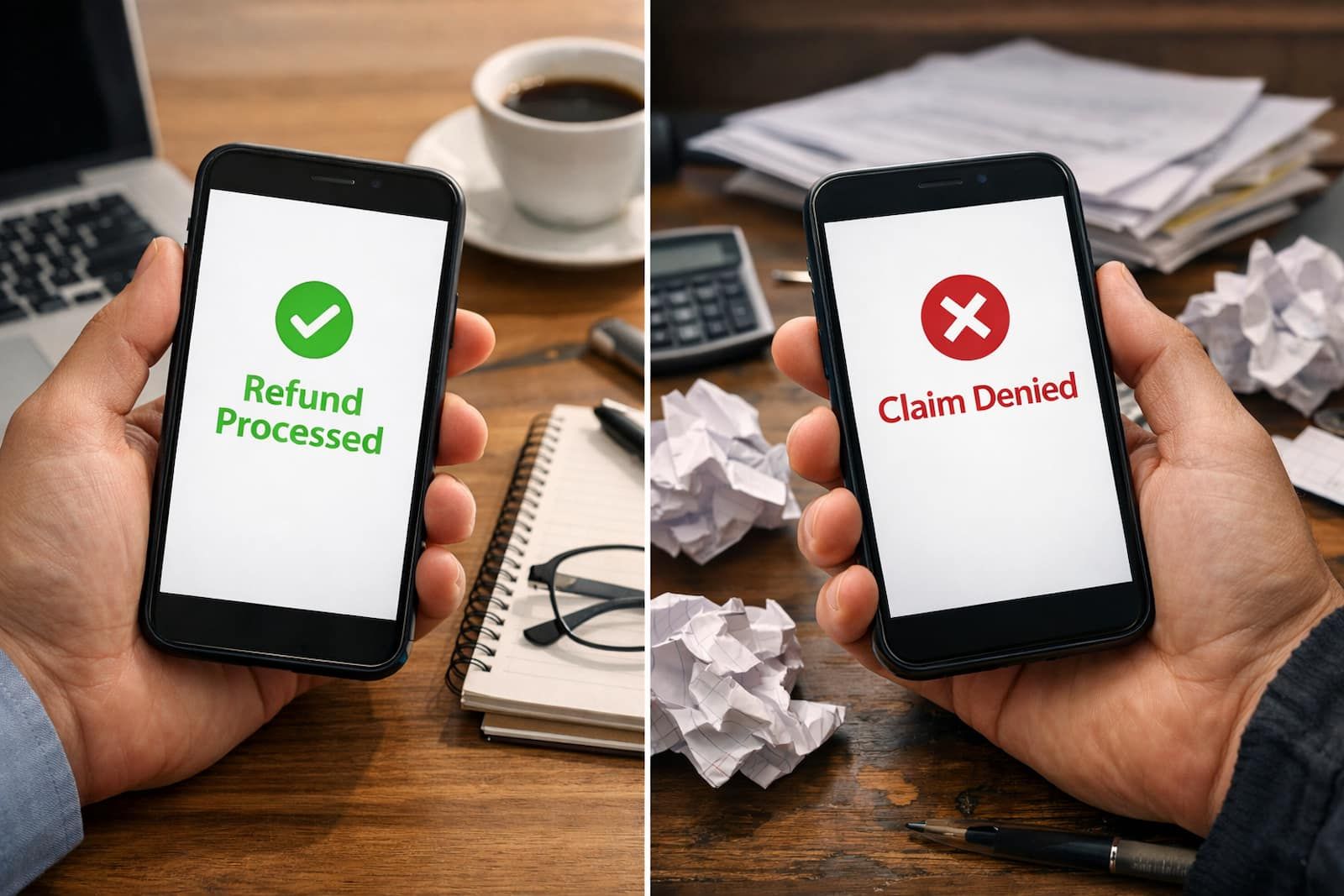
APP scam refunds are not automatic. Banks may refund more often when transfers are unauthorized, when required controls fail, or when a reimbursement regime applies. Your leverage is speed, evidence, and escalation in writing. This guide maps practical refund triggers for the US, UK, Canada, Australia, and New Zealand.
In 2026, banks may be required to refund some Authorized Push Payment (APP) scam losses when the transfer is truly unauthorized, when bank errors or required controls fail, or when local reimbursement regimes apply. If the payment was authorized under deception, outcomes become fact-driven: timing, rail finality, and evidence quality often decide whether reimbursement or complaint escalation succeeds.
Authorized push payment scam rules 2026: what this guide actually proves
Banks and scammers both rely on one trick: classification.
If your case is classified as unauthorized access (account takeover), refund obligations and investigation duties are usually stronger. If it is classified as authorized under deception (APP scam), banks often push you into policy lanes, delays, and denials unless you build a clean record and escalate correctly.
This is not about emotions. This is about outcomes.
Definition
An Authorized Push Payment (APP) scam is when a person or business authorizes a bank transfer or instant payment after being deceived, impersonated, or pressured, sending money to a scammer or mule account. The payment is authorized on the screen, but the decision was engineered through fraud.
The bank script we are dismantling
If you report an APP scam, many banks try one line.
“You authorized the payment.”
That sentence is not a legal conclusion. It is a process move. It shifts your case from “unauthorized fraud” into “authorized payment under deception,” where refunds are harder and evidence has to do the heavy lifting.
The scammer sells urgency. The bank sells paperwork.
If the bank moves slower than the scam, it is not service. It is surrender.
The rail reality (because infrastructure beats fairness)
APP scams ride fast payment rails because fast rails reduce reversibility. This is operations, not morality.
| Rail pattern | What recovery looks like | Why APP scams love it |
|---|---|---|
| Instant push payments (Faster Payments, NPP-style) | Freeze attempt, mule tracing, reimbursement review | Money moves fast. Casework moves slow. |
| Domestic bank transfer | Recall or return request, receiving bank cooperation | Settlement creates finality and delay. |
| Cross-border transfer | Cooperation request, sometimes legal process | Jurisdictions add delay and excuses. |
Cross-border limitation note: if the receiving institution is in another country, your bank can request action, but foreign institutions follow local rules and legal constraints. Cooperation becomes the bottleneck.
If you need the jurisdiction and cooperation reality for overseas recipients, use this guide after you understand the rail basics: Cross-border fraud investigation reality.
Bank script translator (what they say vs what it means)
Banks do not always lie. They often answer the wrong question.
- What they say: “You authorized it, so we cannot refund.”
- What it often means: “We classified this as APP deception, not unauthorized access. Refund rights are weaker. You need a formal complaint record and evidence that forces review.”
- What they say: “We are investigating.”
- What it often means: “You are in a queue until you send a complete evidence pack and a timeline in writing.”
- What they say: “Nothing can be done because it is instant.”
- What it often means: “A freeze or recall attempt may not have been initiated, or it was not documented for you. Ask for written confirmation of what was attempted and when.”
“Instant” was built for salaries, not for thieves. Thieves still got the faster checkout.
Refund trigger map (when banks may have to pay)
There is no global APP refund law. There is a stack: local rules, regulator expectations, payment scheme rules, and bank policy.
Here is the clean model that stays true across countries.
1) Unauthorized beats authorized
If the payment was initiated through account takeover (ATO) or without consent, refund duties and timelines are usually stronger. That is the “unauthorized transfer” lane.
2) Control failures create complaint leverage
If warnings, confirmations, or security controls were missing or broken, that can create escalation leverage. You are not arguing feelings. You are arguing process failure.
3) Reimbursement regimes are jurisdiction-specific
Some regions apply stronger expectations for APP scam handling than others. Keep your argument jurisdiction-aware.
If you want the broader “refund duties by rail and region” map that sits above APP scams, read: Bank scam refund rules and victim rights.
Compliance warning: Do not invent facts to sound convincing. Inconsistencies destroy credibility.
The first 24 hours (control-first timeline)
This is triage, not advice theater.
T+0 to T+1 hour (stop the bleeding)
- Lock online banking access.
- Remove unknown payees.
- Turn on transaction alerts.
- Secure email first (password, MFA, forwarding rules).
- Call your mobile carrier if SIM swap is plausible (port freeze or port-out PIN).
A scam needs your speed. Stop donating it.
T+1 to T+4 hours (force the bank to take a position)
Use a script. Get a case ID. Force classification in writing.
“I am reporting an authorized push payment scam. I need the fraud team. I need the payment rail confirmed in writing. I need an urgent recall or freeze request initiated. I need a case reference number. I need the classification stated: unauthorized access, authorized under deception, or both.”
Ask for:
- Case ID and contact method
- Whether a freeze or recall request was sent to the receiving bank
- The expected investigation timeline
- The complaint escalation channel
No case ID means no case. It means vibes.
T+4 to T+24 (build the file they cannot ignore)
Send one message with a complete evidence pack. Do not drip-feed screenshots for two weeks.
If you want the broader first-day containment checklist that covers online banking compromise, device evidence, and reporting order, use: First 24 hours fraud recovery steps.
DV Evidence Pack (structured list suitable for extraction)
Put everything in one folder. Name files with timestamps.
- One paragraph timeline (what happened, when, how deception worked)
- Transaction IDs and receipts
- Payee or beneficiary details (name, account identifiers, reference)
- Screenshots of warnings (or the absence of them)
- All scam communications (email headers, chats, call logs)
- Proof of account access changes (new payees, new device logins, password reset emails)
- Police report or incident number (where appropriate)
- Bank communications and case ID
Screenshots are adult supervision for your claim.
Two micro-scenarios with numbers (because math forces seriousness)
Scenario A (consumer APP transfer): bank support impersonation
A US customer is pushed into sending $2,900 through an instant push payment. They call the bank 90 minutes later.
Expected value framing (illustrative and bank-dependent):
- If same-day action creates a 20% chance of recovery: $2,900 × 0.20 = $580 expected recovery value.
- If waiting drops it to 5%: $2,900 × 0.05 = $145.
Delay cost: $580 − $145 = $435 expected value burned by time.
The scammer used a stopwatch. Use one too.
Scenario B (SMB invoice redirection): supplier bank details “updated”
A Canadian SMB pays CAD 38,000 after a spoofed invoice change. Money goes cross-border. Discovery occurs at 6 hours.
Second-order cost math before any refund decision:
- FX spread loss estimate: 2.5% × CAD 38,000 = CAD 950
- Fees estimate: CAD 85
- Internal admin time: 8 hours × CAD 55 loaded = CAD 440
Visible second-order cost: CAD 1,475 before the case outcome.
APP scams steal money and then rent your calendar.
Comparison table (speed vs reversibility vs evidence burden)
Use this table to decide what to push first: classification, freeze attempts, or evidence.
| Case type | Speed that matters | Reversibility | Evidence burden |
|---|---|---|---|
| ATO (unauthorized access) | Hours | Medium (bank can treat as fraud) | Login history, device alerts, reset logs |
| APP deception (you sent it) | Minutes to hours | Low to medium (freeze depends on mule) | Scam communications, warning screenshots, clean timeline |
| Cross-border APP transfer | Hours | Low (cooperation dependent) | All above plus beneficiary bank identifiers |
Finality is a payment concept. Scammers treat it as a hobby.
Region-by-region rules
Jurisdiction clarification: refund duties and complaint pathways vary by country, bank, and payment type. Do not argue UK rules at a US bank call center.
United States
Regulator references: CFPB, FTC, Federal Reserve Regulation E framework.
Operational reality:
- Regulation E is strongest for unauthorized electronic transfers.
- Many APP scam disputes are treated as authorized under deception, which often shifts outcomes toward bank policy, fraud claim handling, and complaint escalation rather than guaranteed reimbursement.
Practical lever:
- Force written classification and send any account takeover artifacts fast.
United Kingdom
References: FCA, Payment Systems Regulator (PSR), Financial Ombudsman Service (FOS).
Operational reality:
- APP scam handling faces higher regulatory pressure than many regions.
- Outcomes often turn on warnings, vulnerability, and whether expected controls were applied.
Practical lever:
- Capture warning screenshots and confirmation screens, then escalate in writing if the bank response is generic or contradictory.
Canada
References: FCAC, FINTRAC.
Operational reality:
- Recalls and freezes often depend on receiving bank cooperation.
- Complaint discipline matters when the bank hides behind vague process language.
Practical lever:
- Demand the complaint reference number, the next escalation level, and a written timeline.
Australia
References: ACCC Scamwatch, AFCA, ASIC.
Operational reality:
- Recovery is rail-driven and speed-driven.
- External dispute resolution can matter when internal handling stalls.
Practical lever:
- Keep the case file clean and escalate when timelines are breached.
New Zealand
References: Commerce Commission, Reserve Bank of New Zealand.
Operational reality:
- Outcomes can depend heavily on timeline clarity and proof of deception.
Practical lever:
- Keep a structured timeline and written record of every bank interaction.
Decision framework (branch matrix)
Use this in 60 seconds.
- If there is ATO evidence (new device login, password reset you did not do, SIM swap), treat it as unauthorized compromise and send the access artifacts.
- If it is APP deception on an instant rail, prioritize written confirmation of freeze attempts and submit the evidence pack the same day.
- If it is cross-border, add beneficiary bank identifiers and adjust expectations because cooperation is the choke point.
- If the bank refuses to state classification or deadlines, move to a formal complaint in writing.
If the bank will not classify it, they will not fix it.
Escalation framework (severity bands)
Use severity, not anger. Anger is renewable. Time is not.
Band A: under $1,000 equivalent, no ATO
- File the claim.
- Preserve evidence.
- Monitor for repeats.
Band B: $1,000 to $10,000 equivalent, deception confirmed
- Demand case ID.
- Demand written rail confirmation.
- Demand documented recall or freeze attempt.
- File a formal complaint if you do not get a timeline.
Band C: over $10,000 equivalent, or ongoing compromise
- Same-day complaint escalation.
- Consider legal counsel (fact-specific) if material loss and process failure evidence exists.
- For SMBs, document internal controls and approval steps.
“We are looking into it” is not a control. It is a lullaby.
Psychology neutralization (why APP scams work)
APP scams are tempo attacks, not intelligence contests.
Common pressure levers:
- Artificial deadlines
- Authority impersonation
- Isolation (“do not tell anyone”)
- Shame triggers
Countermove:
- Slow the decision by 10 minutes.
- Verify through a second channel.
- For SMBs, require a second approver for beneficiary changes.
A scam collapses when verification enters the room.
Prevention differences (individual vs SMB)
Individuals:
- Separate banking email from public signups.
- Use authenticator apps where possible.
- Keep transaction alerts always on.
SMBs:
- Out-of-band verification for vendor bank detail changes.
- Dual approval for beneficiary additions.
- Payment limits by role.
- Maintain an incident playbook and evidence retention.
If one inbox can move payroll, the scam is already inside.
Screenshot checklist (what banks actually ask for)
- Transfer confirmation screen and reference number
- Payee added screen (if applicable)
- Transaction details screen (amount, time, beneficiary)
- Scam emails with headers
- Chat exports (WhatsApp, Telegram, SMS)
- Call logs and timestamps
- Bank warning screens (or absence of them)
- Device and login history screens
Operational cost table (real math, not vibes)
| Cost line | Simple math | Example |
|---|---|---|
| FX spread loss | Amount × spread | $38,000 × 2.5% = $950 |
| Internal time | Hours × loaded wage | 10 × $55 = $550 |
| Bridge financing | Principal × APR × (days/365) | $20,000 × 18% × (30/365) ≈ $296 |
Fraud is theft plus an unpaid internship.
FAQs
Are banks required to refund authorized push payment scams?
Sometimes. In 2026, outcomes depend on jurisdiction, rail finality, reimbursement regimes, and whether the case is classified as unauthorized access versus authorized under deception.
What is the fastest action that improves APP scam recovery odds?
Same-day reporting plus a complete evidence pack, and forcing the bank to document recall or freeze attempts with a case ID.
What evidence increases APP scam refund chances the most?
Transaction IDs, beneficiary identifiers, scam communications, and screenshots of warnings or confirmation screens, plus any account takeover artifacts.
How long do APP scam investigations take?
Days to weeks depending on bank policy and payment rail. Demand a written timeline and the escalation channel.
What if the bank says “you authorized it” and closes the case?
Escalate in writing. Ask for the classification rationale, the dispute policy section used, and the next complaint level or ombuds path.
Should we report to regulators or law enforcement?
For high-value losses, yes. Reports create records that can support escalation, but they do not guarantee recovery.
Does cross-border routing reduce refund chances?
Often. Cross-border adds institutions and jurisdiction limits, increasing reliance on cooperation.
Can SMBs be treated differently than consumers?
Yes. Contracts, internal controls, and approval processes can matter more for SMB losses and insurance or legal outcomes.
Reviewed for accuracy
Reviewed for accuracy on 17 March 2026.
Regulatory citation placeholders: CFPB, FTC, Federal Reserve Regulation E guidance, FCA, PSR, FOS, FCAC, FINTRAC, ACCC Scamwatch, AFCA, ASIC, New Zealand Commerce Commission, Reserve Bank of New Zealand.
Disclaimer
Educational information only. Not legal advice. Not financial advice. Rules and outcomes vary by jurisdiction, bank policy, and the specific facts.
Recovery depends on timing, documentation, and bank cooperation.
Scammers love silence—so file the paperwork loudly.
Report fast, document everything, and force deadlines.