Authorized Push Payment (APP) Scam Rules 2026: Global Bank Refund Requirements
Understand how Authorized Push Payment (APP) scam refund rules work in 2026 across the UK, EU, US, Australia, Canada, and other regions. Learn when banks must reimburse scam victims, what evidence they require, and the steps to maximize your chances of recovering stolen money.

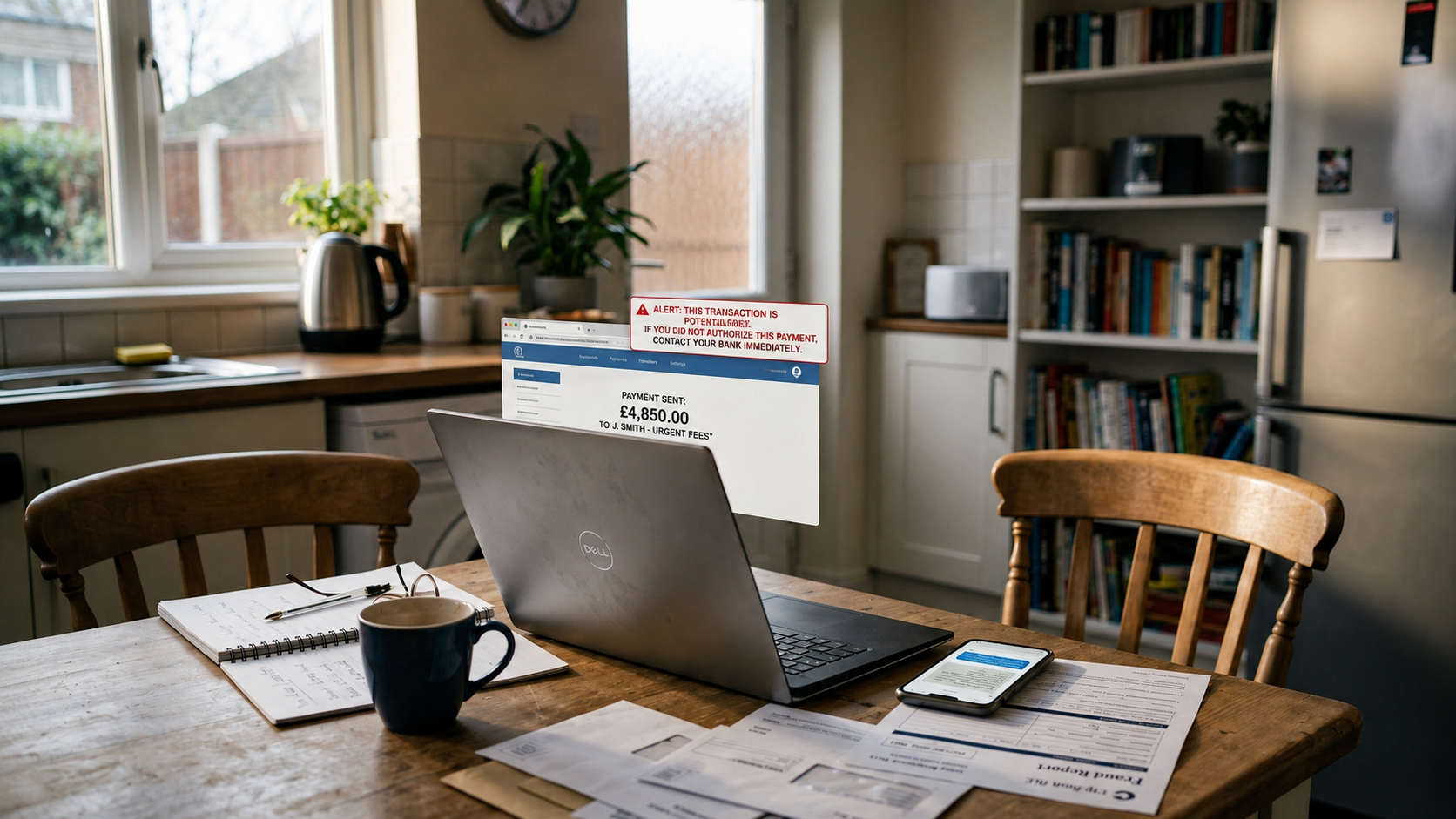
Banks love the word “authorized” because it makes a scam transfer sound clean.
It was not clean.
An Authorized Push Payment scam happens when a criminal tricks a victim into sending money from their own account to a scam-controlled account. The victim presses the button, yes. But the decision was poisoned by deception, pressure, impersonation, fake urgency, or a financial fairy tale built by a criminal with a script and no shame.
That is why APP scam refund rules matter. The real question is not simply, “Will my bank refund me if I was scammed?” The real question is: what country are you in, what payment rail was used, when did it happen, what evidence exists, and what legal or regulatory scheme applies?
In 2025, UK Finance reported that criminals stole £1.28 billion through payment fraud, up four percent from 2024. That is not “a few unlucky people clicked the wrong thing.” That is industrial-scale theft with call centers, mule accounts, fake platforms, hacked messages, and payment systems built for speed before they were built for fraud survival.
TL;DR
- APP scam refund rules depend on your country, payment method, reporting speed, evidence, vulnerability, and whether the payment falls inside a formal reimbursement scheme.
- The core operational risk is ugly: because you authorized the transfer, banks may treat the claim differently from unauthorized account fraud.
- If this happened in the last fifteen minutes, call your bank’s fraud team now, say “Authorized Push Payment scam,” request a recall or hold, and get a case number in writing.
- The UK has the strongest formal APP reimbursement regime for many eligible Faster Payments and CHAPS scams; the US, Canada, Australia, and New Zealand rely more on payment-specific rules, bank procedures, complaint escalation, and developing scam-prevention duties.
- Recovery is possible in some cases, but never guaranteed. Anyone selling “guaranteed recovery” is probably the second scam arriving with cleaner shoes.
What APP Fraud Actually Means
Authorized Push Payment fraud is not the same thing as someone stealing your card and spending your money without permission.
APP fraud means you were manipulated into sending the payment yourself.
That manipulation may come from:
- A fake bank employee
- A fake police officer or government official
- A romance scammer
- A fake investment platform
- A crypto fraud operation
- A hacked supplier email
- A fake invoice
- A property deposit scam
- A fake job or task scam
- A fake recovery agent pretending to help after the first fraud
The scammer’s trick is not technical genius. It is social engineering with a payment deadline taped to it.
They create fear, trust, greed, romance, confusion, or urgency. Then they push the victim into moving money before the brain has time to drag the situation into court and cross-examine it.
The payment may look “authorized” in the banking system.
But in reality, the victim’s consent was dragged through a sewer of lies first.
That distinction matters because many banking rules were originally designed around unauthorized fraud. APP scams sit in the dirtier middle ground: the victim initiated the payment, but the reason for the payment was fraudulent.
That is the battlefield.
The Global Refund Reality
| Country | Are APP scam refunds legally required? | What matters most | Practical reality |
|---|---|---|---|
| UK | Often, for eligible Faster Payments and CHAPS APP scams | Payment date, payment type, claim scope, vulnerability, consumer conduct, cooperation | Strongest formal reimbursement regime among these countries |
| US | Not generally guaranteed for scam transfers the consumer authorized | Payment rail, Regulation E facts, platform rules, bank policy, evidence, complaint pressure | Many authorized scam claims are denied unless they fit specific rules or strong policy exceptions |
| Canada | No broad automatic APP reimbursement rule | Reporting speed, bank procedures, complaint escalation, evidence, receiving bank action | Recovery depends heavily on timing and institutional handling |
| Australia | Prevention obligations are expanding under the Scams Prevention Framework | Bank conduct, telco/platform role, reporting, evidence, dispute process | Stronger anti-scam duties are developing, but compensation is still fact-specific |
| New Zealand | No universal APP refund guarantee | Speed, evidence, bank response, receiving account freeze, complaint escalation | Fast reporting is critical because mule accounts do not politely wait around |
Here is the clean version: some countries are forcing payment firms to take APP scams more seriously.
Here is the dirty version: the money still moves fast, and your claim gets stronger when your evidence moves faster.
If the funds are still sitting in a receiving account, a freeze or recall may help. If the money has already been split, withdrawn, converted to crypto, or bounced through mule accounts, recovery gets uglier.
This is not a movie where the bank hits “undo.”
This is payments infrastructure, paperwork, liability rules, fraud operations, and complaint escalation. Bring evidence. Bring dates. Bring transaction IDs. Bring receipts. Leave vague panic at the door.
UK APP Scam Refund Rules: Strong Protection With Teeth And Fine Print
The UK is currently the strongest jurisdiction in this guide for APP scam reimbursement.
From 7 October 2024, the UK Payment Systems Regulator introduced mandatory reimbursement protections for many APP scams involving Faster Payments and CHAPS.
The PSR says in-scope consumers who fall victim to APP scams should be reimbursed in most cases. The process generally expects reimbursement within five business days of the claim. If the payment firm needs more information, it may “stop the clock,” but it must usually reach an outcome within 35 business days.
The key UK rules include:
- The scheme applies to eligible APP scam payments made on or after 7 October 2024.
- It covers many consumer, microenterprise, and charity payments made through Faster Payments and CHAPS.
- The maximum reimbursement limit started at £85,000 per claim.
- Firms may apply an optional excess of up to £100.
- That excess cannot be applied to vulnerable consumers.
- Payments made before 7 October 2024 are not covered by the mandatory scheme, though firms may still reimburse voluntarily.
The PSR’s reimbursement dashboard for Q4 2025 reported that 89% of money lost to APP scams had been reimbursed to victims under the monitored regime, with most claims closed within the five-business-day or 35-business-day windows.
That is a major shift.
It does not mean every UK scam payment is automatically refunded. Scope still matters. Payment type matters. Dates matter. Conduct matters. Exclusions matter. The bank may still ask whether the case is actually an APP scam, whether the victim cooperated, whether warnings were ignored, and whether the claim falls outside the scheme.
But compared with the old “you authorized it, goodbye” routine, the UK rules put real pressure on payment firms to stop hiding behind the word “authorized” like it is a magic cloak.
UK: What To Do If You Were Scammed
If you are in the UK and the payment was made by Faster Payments or CHAPS:
- Call your bank’s fraud team immediately.Use the number inside your banking app or on the official website. Not a number from a text. Not a number from the scammer. Scammers love fake helplines because apparently one robbery was not enough.
- Use the correct classification.Say: “I am reporting an Authorized Push Payment scam and making a reimbursement claim under the APP scam reimbursement rules.”
- Ask if the payment is in scope.Get confirmation of:
- Payment date
- Payment method
- Amount
- Receiving account details
- Whether the claim is being handled under the PSR APP reimbursement rules
- Ask about the timeline.Ask whether the bank expects a five-business-day decision or whether it is stopping the clock for more information.
- Get the denial reason in writing if refused.If the bank denies the claim, ask for a final response letter and the exact rule or exclusion relied on.
- Escalate if the handling is weak.If the response is vague, delayed, or badly reasoned, consider escalating to the Financial Ombudsman Service.
Some denials are valid. Some are lazy. Your job is to build the file well enough to tell the difference.
US APP Scam Refund Rules: Regulation E Is Not A Universal Rescue Truck
The US system is messier.
American consumers often hear “fraud protection” and assume it covers every scam payment. That assumption gets people hurt.
In the United States, Regulation E provides protections for certain electronic fund transfer errors, especially unauthorized electronic transfers. But many APP scams are disputed because the consumer technically authorized the payment after being manipulated.
That distinction matters.
If a criminal broke into your account and sent money, that may be unauthorized fraud.
If a criminal tricked you into sending money yourself, the bank or payment app may argue that the transaction was authorized, even though the reason for sending it was fraudulent.
That does not mean you should fold like wet cardboard.
It means your claim needs to be built around the exact facts.
You need to identify whether the payment involved:
- Zelle
- ACH
- Wire transfer
- Debit card
- Credit card
- Cash App
- Venmo
- PayPal
- Bank bill pay
- Crypto transfer
- Account takeover
- Unauthorized login
- A mistaken transfer
- Scam-induced authorized payment
- Bank warnings
- Bank delay
- Platform failures
- Failure to investigate properly
Do not throw all of these into one bucket called “bank fraud.” That bucket leaks.
A credit card scam, a wire transfer scam, a Zelle scam, and a crypto transfer are different animals. Treating them the same is how claims die in a support queue wearing a tiny paper hat.
The CFPB filed a lawsuit in December 2024 against Early Warning Services and several major banks over alleged Zelle fraud-related failures. The CFPB later voluntarily dismissed the action with prejudice in March 2025. That dismissal did not create a refund guarantee. It also did not make Zelle fraud disappear into a corporate fog machine.
The useful takeaway is narrower and more practical: instant payment fraud remains a major regulatory and consumer-protection pressure point, but US victims still need payment-specific evidence and escalation discipline.
US: What To Do If You Were Scammed
- Report the scam immediately to your bank or payment provider.Ask for:
- Fraud claim number
- Written dispute record
- Recall or recovery attempt
- Receiving bank notification
- Confirmation of the payment rail involved
- Separate authorization from deception.Say clearly: “I initiated the payment because I was deceived by a scam. I am asking for a fraud review and written explanation of my rights and the institution’s decision.”
- Check whether there was unauthorized access.If the scammer accessed your account, device, credentials, app, or payment profile, say so. That may change the analysis.
- File official reports.Use:
- FTC: ReportFraud.ftc.gov
- FBI IC3: ic3.gov
- Local police
- State attorney general, when relevant
- CFPB complaint if a financial institution mishandles the dispute
- Demand a real denial explanation.If the bank denies the claim with “you authorized it,” ask what facts it reviewed, what rule it applied, whether it considered deception, whether it assessed unauthorized access, and whether it contacted the receiving institution.
A lazy denial is not the end of the road. It is evidence for the next file.
For a deeper breakdown of how institutions review fraud claims, read Dollar Vigil’s guide on why banks reject scam refund claims and what evidence actually changes their minds.
Canada: No Broad Automatic Refund, So The Complaint File Matters
Canada does not currently have a broad UK-style mandatory APP reimbursement scheme for consumer scam transfers.
That means recovery usually depends on:
- How quickly you reported the scam
- Whether the receiving account can be frozen
- Whether unauthorized access occurred
- Whether the bank followed its own procedures
- Whether warnings or red flags were ignored
- Whether the institution handled the complaint fairly
- Whether the receiving bank can cooperate
- Whether you can prove the timeline and deception
Canadian victims should report the scam to their bank immediately and ask the bank to contact the receiving institution. File a police report and report the scam to the Canadian Anti-Fraud Centre.
If the bank’s handling is weak, escalate through the bank’s complaint process. If unresolved, the next external complaint path may involve OBSI or ADRBO, depending on the bank.
This is not glamorous. It is paperwork warfare.
And paperwork warfare is still warfare.
Canada: What To Put In The Complaint
Your complaint should include:
- Date and time of each payment
- Amount and recipient details
- How the scammer contacted you
- Screenshots of messages, emails, ads, websites, or invoices
- Call logs
- Bank warnings shown before payment
- What the scammer told you to say or hide
- When you reported it
- What the bank did after the report
- Police or Canadian Anti-Fraud Centre reference numbers
Do not send an emotional essay with no documents attached. Outrage may be justified, but evidence moves the complaint.
Australia: The Scams Prevention Framework Moves The Fight Upstream
Australia is moving toward a stronger anti-scam system through the Scams Prevention Framework (SPF).
The framework is designed to place obligations on regulated entities in scam-heavy sectors. Analysis from K&L Gates describes the SPF as initially applying to banks, telecommunications providers, and digital platform service providers offering social media, paid search advertising, or direct messaging services.
That matters because APP scams rarely happen inside one tidy banking box.
The scam may start with:
- A fake search ad
- A social media investment page
- A WhatsApp or Telegram message
- A spoofed phone call
- A fake bank alert
- A compromised email thread
- A mule account receiving the funds
Then everyone points at everyone else while the victim stands there holding the invoice for a crime they did not design.
The Australian approach recognizes the ecosystem problem. Good. Because scammers have been using cross-sector gaps like a VIP entrance.
But do not confuse prevention obligations with an automatic refund button. The SPF is not the same as the UK reimbursement model. Compensation and dispute outcomes still depend on the facts, the institutions involved, the applicable code or obligation, and how the case is handled.
Australia: What To Do If You Were Scammed
- Contact your bank immediately and ask for a recall, hold, or receiving bank notification.
- Report the scam to Scamwatch.
- Preserve platform evidence, including ads, profiles, URLs, usernames, phone numbers, and chat logs.
- Keep all transaction records.
- Escalate through the bank’s internal dispute resolution process.
- If unresolved, consider escalation to AFCA where appropriate.
- If the scam involved a telco or platform failure, preserve that evidence too.
Do not wait until you have built the perfect evidence museum before reporting. Report first. Build the file immediately after.
New Zealand: Speed And Evidence Carry The Claim
New Zealand does not have a universal APP scam refund guarantee.
That means timing is brutal.
If you report quickly, your bank may be able to contact the receiving bank, request a freeze, trace the payment, or preserve useful information. If you wait, the money may already be split, withdrawn, or moved offshore.
Scammers do not park stolen funds in a savings account and wait for your complaint letter. They move like they owe rent to organized crime.
New Zealand: What To Do If You Were Scammed
- Contact your bank immediately.
- Ask the bank to notify the receiving bank.
- Report the scam to police.
- Report relevant cyber or online scam details to CERT NZ.
- Preserve every message, receipt, URL, phone number, account number, and screenshot.
- Escalate through the bank’s complaints process if the response is weak, delayed, or vague.
The lack of a universal refund rule does not mean you have no options. It means your options depend heavily on speed, documentation, and whether the institution handled the case properly.
Step-By-Step APP Scam Recovery Workflow
This is the part where panic needs to shut up and take notes.
If you authorized a transfer to a scammer, do the following in order.
First 15 Minutes
| Action | What to say or do | Why it matters |
|---|---|---|
| Call your bank’s fraud team | “I sent money because of an Authorized Push Payment scam.” | Correct classification helps avoid support-script nonsense |
| Request a recall or hold | Ask the bank to contact the receiving institution immediately | Speed may help freeze remaining funds |
| Get a case number | Ask for written confirmation by secure message or email | No case number means you are shouting into fog |
| Identify the payment rail | Wire, Faster Payments, CHAPS, ACH, Zelle, card, app, crypto | Different rails have different rules and recovery options |
| Preserve evidence | Screenshots, transaction IDs, messages, URLs, phone numbers | Claims live or die on records |
If the payment was a wire, ask specifically about a recall. A wire recall is a request to the receiving institution. It is not a magic reversal spell. For the full mechanics, read Dollar Vigil’s guide on whether banks can reverse wire transfer scams.
First 24 Hours
Build the file.
Do not rely on memory. Memory gets shredded by stress.
Create a timeline with:
- When the scammer first contacted you
- What identity they used
- What they promised or threatened
- What payment instructions they gave
- Whether they coached you on what to tell the bank
- Each payment amount
- Each payment date and time
- Recipient names, account numbers, wallet addresses, or platform IDs
- When you realized it was a scam
- When you reported it
- What the bank or platform told you
Then file external reports:
- Police report
- National fraud reporting body, where available
- Platform report, if the scam began on social media, search ads, messaging apps, or marketplaces
- Regulator or complaint body escalation if the institution mishandles the case
If the scam exposed personal information, treat identity theft as a separate emergency. A payment dispute does not magically protect your credit file, login credentials, phone number, or documents. If your personal data was compromised, compare credit freezes and fraud alerts after identity theft and lock down the damage path.
First 7 Days
If the bank has not resolved the case, move from “fraud report” mode into “dispute file” mode.
Ask for:
- Written status update
- Confirmation of recall or receiving bank contact
- Exact reason for any rejection
- Copy or summary of the rule relied on
- Whether vulnerability was considered
- Whether the bank reviewed warnings shown before payment
- Whether the bank reviewed mule-account concerns
- Whether the bank considered scam coaching or impersonation
This is where weak claims get stronger.
Not because you shouted louder.
Because you forced the institution to explain its reasoning in writing.
Refund Eligibility: The Questions That Decide The Fight
Use this decision framework before assuming the bank must refund you.
| Question | Why it matters |
|---|---|
| Was the payment actually authorized by you? | Unauthorized access may trigger different protections than APP fraud |
| What country are you in? | APP scam refund rules are jurisdiction-specific |
| What payment rail was used? | Wires, cards, ACH, Zelle, Faster Payments, CHAPS, PayPal, and crypto have different rules |
| When was the payment made? | UK mandatory APP reimbursement applies only from 7 October 2024 for in-scope payments |
| Was the recipient account domestic or overseas? | Cross-border recovery is usually harder |
| Did the bank show warnings? | Warnings may affect customer conduct arguments |
| Did the scammer coach you to bypass warnings? | Coaching supports manipulation and context |
| Were you vulnerable? | Vulnerability can affect reimbursement analysis, especially in the UK |
| How fast did you report? | Fast reporting improves freeze and recall chances |
| Can you prove the deception? | Scam messages, fake websites, and call logs matter |
| Did the institution handle the claim properly? | Poor handling can strengthen escalation |
The answer is rarely “bank refunds all scams” or “bank owes nothing because authorized.”
Those are lazy bumper stickers.
The real answer is buried in facts, rules, timelines, and evidence.
Evidence That Actually Matters
Banks and complaint bodies do not need a dramatic autobiography.
They need proof.
| Evidence | Why it matters |
|---|---|
| Payment receipts | Shows amount, date, payment method, and destination |
| Transaction IDs | Helps trace the payment path |
| Scam messages | Proves deception, urgency, impersonation, or false claims |
| Emails and invoices | Useful in business email compromise and fake invoice scams |
| Call logs | Supports timing and contact pattern |
| Screenshots of websites or ads | Shows the scam entry point |
| Bank warning screens | Important if the bank argues you ignored warnings |
| Your response to warnings | Shows whether your conduct was reasonable in context |
| Police or fraud report numbers | Supports seriousness and escalation |
| Bank communication records | Shows whether the institution acted quickly or dragged its shoes |
| Recipient account details | Helps with receiving bank notification |
| Timeline document | Turns chaos into an evidence trail |
Do not edit screenshots beyond privacy redaction.
Do not delete embarrassing messages.
Embarrassment is not evidence contamination. Deleting records is.
What Banks Actually Look At
A bank may not be asking, “Were you scammed?”
The answer may obviously be yes.
The bank may be asking a colder question: Do the rules, payment rail, and evidence require reimbursement for this specific transaction?
Banks commonly assess:
- Was the payment authorized?
- Was there unauthorized account access?
- Was the customer manipulated?
- Is the claim inside a reimbursement scheme?
- Did the bank show warnings?
- Did the customer ignore warnings?
- Was the customer vulnerable?
- Was the receiving account suspicious?
- Was the claim reported quickly?
- Did the customer cooperate?
- Can any funds still be recovered?
- Did the bank follow required procedures?
- Is the matter actually a scam or a private civil dispute?
That last one matters.
Some disputes are not APP scams. A failed purchase, bad investment, contract argument, or business dispute may be treated differently. Scammers exploit that confusion too. They dress theft as commerce, investment, romance, or official procedure. Cute little costume department. Still theft when the facts prove deception.
Common Bank Denial Arguments And How To Respond
| Bank argument | What it usually means | How to respond |
|---|---|---|
| “You authorized the transaction.” | They are separating scam manipulation from unauthorized access | Confirm it was authorized under deception and request APP scam assessment |
| “You ignored warnings.” | They may argue you failed to take sufficient care | Provide context: pressure, impersonation, coaching, vulnerability, and warning wording |
| “We could not recover the funds.” | The money moved or the receiving bank could not freeze it | Ask whether reimbursement is separate from fund recovery under applicable rules |
| “This is a civil matter.” | They may be saying it is a dispute, not a scam | Provide evidence of deception, fake identity, false claims, or criminal intent |
| “Contact the recipient.” | Support-script nonsense if the recipient is a mule or scammer | Ask the bank to contact the receiving institution through fraud channels |
| “Use the app support page.” | The institution may be pushing you into low-level support loops | Escalate to fraud, complaints, regulator, or ombudsman route where appropriate |
A denial is not automatically wrong.
But a vague denial is weak.
Make them explain the facts, the rule, and the reasoning.
Recovery Timelines: What Is Realistic?
| Situation | Possible timeline | Reality check |
|---|---|---|
| UK eligible APP claim | Often within 5 business days, up to 35 business days if more assessment is needed | Strong protection, but scope still matters |
| Wire recall | Hours to days for the attempt, longer for outcome | A recall is a request, not a commandment from heaven |
| P2P payment scam | Days to weeks | Depends on platform, bank, account status, and facts |
| Bank complaint | Weeks | Internal teams move at compliance speed, not human-panic speed |
| Ombudsman or external complaint | Months | Useful for unfair handling, not instant rescue |
| Crypto transfer | Often difficult or impossible unless funds hit a cooperative exchange | Blockchain visibility does not equal recovery |
If someone says they can recover your stolen money in 48 hours for an upfront fee, ask why this miracle worker is advertising in your DMs instead of running global asset recovery for law enforcement.
There is your answer.
The Decision Tree: What Should You Do Next?
If The Payment Was Made In The UK After 7 October 2024
Ask whether it falls under the PSR APP reimbursement rules for Faster Payments or CHAPS.
If the bank denies the claim, ask for:
- The specific exclusion
- Whether vulnerability was assessed
- Whether the excess was applied
- Whether the payment type was in scope
- Whether the decision was made within the required timeframe
- A final response letter if you want to escalate
If The Payment Was A US Zelle Or Instant Transfer Scam
Report immediately and preserve every message.
Ask the institution to explain:
- Whether it treated the case as authorized scam fraud or unauthorized access
- Whether Regulation E was considered
- Whether account takeover indicators were reviewed
- Whether the receiving institution was contacted
- Whether the payment network has relevant fraud handling procedures
Do not let “you authorized it” become the entire investigation. That is not an investigation. That is a shrug with a logo.
If The Payment Was A Wire Transfer
Request a wire recall immediately.
Ask for:
- Recall reference number
- Date and time the recall was sent
- Receiving bank contact confirmation
- Whether funds remain in the account
- Whether the bank filed or requested fraud notices through proper channels
Delay is poison.
A wire recall may fail even when the bank acts properly. But failing to request one quickly is how money disappears while everyone updates the ticket status.
If The Payment Went To Crypto
Preserve:
- Wallet addresses
- Transaction hashes
- Exchange account names
- Screenshots of fake investment dashboards
- Chat logs
- Deposit instructions
- Withdrawal demands
- Recovery-fee demands
Contact the exchange if you know where funds landed. Report wallet addresses to law enforcement and relevant platforms.
Do not pay “crypto recovery” strangers. Most of them are just scammers with a blockchain explorer, a fake badge, and the moral depth of a parking lot puddle.
If The Scam Started On Social Media, Search Ads, Or Messaging Apps
Save:
- Ad screenshots
- Profile URLs
- Page names
- Usernames
- Phone numbers
- Chat logs
- Payment instructions
- Any platform complaint number
Australia’s SPF approach shows why this matters. Modern APP scams are often cross-sector crimes. The bank may be the final payment exit, but the scam may have been recruited through a platform, amplified by an ad system, and pushed through telecoms.
The scam ecosystem is not one pipe. It is a dirty little plumbing network.
Red Flags That You Were In An APP Scam
- You were told to act urgently.
- You were told not to speak honestly with your bank.
- You were coached on what to say to bank staff.
- You were told to move money to a “safe account.”
- You were promised guaranteed investment returns.
- You were asked to pay taxes, clearance fees, withdrawal fees, or verification deposits.
- The recipient name did not match the story.
- The caller claimed to be from your bank, police, government, exchange, or fraud department.
- The person moved you from a public platform to WhatsApp, Telegram, Signal, or private chat.
- The scammer became angry, romantic, threatening, or dramatic when you hesitated.
- You were told the opportunity was secret, limited, urgent, or only available today.
- You were shown fake dashboards, fake profits, or fake pending balances.
The coaching part is especially filthy.
Scammers know bank fraud questions. They train victims to bypass controls, then some institutions later point at those bypassed controls like the victim invented the criminal script.
Beautiful little blame machine.
Disgusting, but common.
Mistakes That Make Recovery Harder
Avoid these.
- Waiting days before reporting
- Calling a phone number supplied by the scammer
- Deleting chats out of embarrassment
- Sending more money to “unlock” funds
- Paying recovery agents
- Describing the case only as “I made a mistake”
- Failing to identify the payment rail
- Ignoring written complaint deadlines
- Sending emotional complaints without evidence
- Assuming police reports automatically force bank refunds
- Assuming bank denial letters are always final
- Assuming all countries have UK-style APP rules
The goal is not to sound dramatic.
The goal is to sound organized enough that nobody can bury your claim under fog.
Sample Bank Complaint Wording
Use this as a starting point. Adjust it to your facts. Do not lie. Do not exaggerate. Lies poison legitimate claims and hand the institution a shovel.
I am reporting an Authorized Push Payment scam. I initiated the payment because I was deceived by a scammer using false representations, pressure, and misleading payment instructions.
Please treat this as a fraud claim and confirm whether the payment is eligible for reimbursement under the applicable rules, scheme, bank policy, or regulatory obligations.
Please confirm the payment rail used, whether a recall or receiving-bank notification has been attempted, and the case reference number.
If you reject the claim, please provide the decision in writing, including the specific facts reviewed, the rule or policy relied on, whether customer vulnerability was considered, whether scam coaching or impersonation was assessed, and whether any receiving account action was taken.
That is not magic language.
It is structure.
Structure beats panic.
FAQs
Can I get my money back after an APP scam?
Maybe. It depends on your country, payment method, timing, evidence, bank procedures, and whether your case falls under a reimbursement scheme. UK victims have stronger formal protection for many eligible Faster Payments and CHAPS scams. In other countries, recovery is more fact-specific and often harder.
Does “authorized” mean the bank can automatically refuse my claim?
No. “Authorized” means you initiated the payment. It does not mean the scam was legitimate. In APP fraud, the whole trick is that authorization was obtained through deception. The bank still needs to assess the claim under applicable rules, policies, and complaint standards.
How fast should I report an APP scam?
Immediately. Minutes matter. The receiving account may be emptied quickly. Fast reporting improves the chance of a recall, freeze, trace, or useful investigation. Waiting gives the mule network time to clean the plate.
What evidence does the bank need?
Payment receipts, transaction IDs, scam messages, call logs, fake websites, screenshots, recipient details, bank warning screens, police or fraud report numbers, and a clean timeline. Give the institution proof, not a cloud of panic.
Are UK APP scam victims always reimbursed?
No. UK protections are strong, but not unlimited. Scope, payment type, date, claim limit, vulnerability, consumer conduct, cooperation, and exclusions can matter. Eligible claims are treated much better than in many other jurisdictions, but “better” is not the same as “automatic.”
Can a wire transfer be reversed after a scam?
Sometimes, but only if the funds can still be intercepted, frozen, or returned by the receiving institution. A wire recall is a request. It is not a guaranteed reversal. Move fast and get written confirmation that the recall was attempted.
Should I file a police report?
Yes, especially for larger losses, identity theft, mule account evidence, threats, or ongoing scam contact. A police report may not recover the money by itself, but it strengthens the evidence file and supports escalation.
Are recovery companies worth paying?
Be extremely careful. Many “recovery experts” are advance-fee scams targeting victims who are already hurt. If they guarantee recovery, demand crypto fees, claim insider bank access, or pressure you to act immediately, treat them like the second predator at the crime scene.
Fact check
APP scams work because payment systems still struggle with a nasty reality: a victim can press the payment button and still be the target of a crime.
Scammers exploit that gap. They impersonate trust. They manufacture urgency. They coach victims past warnings. They use mule accounts like disposable gloves. Then, when the money is gone, fake recovery clowns crawl out of the drain promising miracles for an upfront fee.
Your best chance is not hope.
It is speed, evidence, correct classification, written escalation, and refusing to let a real scam get buried under the lazy word “authorized.”
Some refunds happen. Some do not. Some denials are valid. Some are corporate fog with a reference number.
Build the file so clearly that nobody gets to pretend the crime scene was just customer choice with a transaction ID.
Disclaimer
This article is for general educational information only and is not legal, financial, or professional advice. Scam refund rules vary by country, payment method, bank policy, evidence, timing, and case details. If you need advice about your specific situation, contact a qualified legal, financial, or consumer-rights professional in your jurisdiction.