Mobile Payment Scam Trends 2026: Loss Prevention Tips
Mobile payment scams are not magic. They are pressure + speed + your own app doing exactly what you told it to do. Here is how to spot them and stop them in 2026.

TL;DR
Mobile payment scams in 2026 are faster, more believable, and more “authorized” than ever. This guide shows the real trends, the detection signals, and the prevention controls that cut losses for individuals and SMBs, plus a 24-hour response plan if money moved.
In 2026, mobile payment scams increasingly use urgency, impersonation, and “safe account” scripts to trick people into approving real transfers in real apps. Loss prevention means treating every payment prompt like a security checkpoint: verify identities out-of-band, lock down account changes, limit transfer rails, document evidence, and escalate within 24 hours.
This article explains what mobile payment scams are doing differently in 2026 and how to prevent losses before and after a transfer.
What you will learn:
- The scam patterns surging in 2026 across mobile banking apps and peer-to-peer payment flows
- The detection signals that show you are being engineered
- Prevention controls for individuals and for small businesses
- What to do in the first 24 hours if money moved, including escalation and evidence
Scope: Mobile payment scam trends and loss prevention tips for 2026. This includes scams that push victims to approve transfers, add payees, change account settings, or move money through mobile-first rails. This does not cover crypto “recovery” services, romance scams in depth, or vendor tool roundups.
Overview
Mobile payment scams in 2026 are not “hacker” stories. They are approval stories. The scammer does not need to break into a bank. The scammer needs you to tap Send while your brain is on fire.
The 2026 shift: more fraud is happening as authorized payments. Meaning: the app works. The money moves. And the dispute becomes a fight about what you “approved.”
If your security model depends on people staying calm, you do not have a security model.
A text says “Fraud detected. Reply Y to stop.” You reply. A caller “from your bank” says you must “move funds to a safe account.” You open your real banking app. You send a real transfer. The scammer celebrates your excellent customer service.
Competitor reality check (so we do not waste your time)
Sections competitors typically include:
- Common scam types (impersonation, fake support, delivery scams)
- Basic red flags (urgency, secrecy, pressure)
- Generic advice (do not click links, use strong passwords)
High-value gaps competitors ignore (we will cover them):
- The approval pipeline: how scams force payee setup, device changes, and authentication resets
- A decision tree with thresholds (not vibes) for when to freeze activity and escalate
- An operational cost breakdown for SMBs, including real math for staff time, chargebacks, and churn risk
Real-world proof (why 2026 is louder): The FBI IC3 has repeatedly reported multi-billion-dollar annual losses from internet-enabled crime in recent years, with 2023 reported at $12.5 billion in losses. That is not “people being careless.” That is professionalized, scalable fraud.
How it works
Mobile payment scams succeed because they exploit three facts:
- Mobile is a trust machine. Your phone is your identity, your bank, your inbox, and your weakness.
- Authentication is not intent. A one-time passcode proves you can receive a code. It does not prove the payment is smart.
- Speed beats verification. Scammers run a timer in your head and call it “security.”
Concrete example: “If you hang up, the transfer will complete. Stay on the line while we secure the account.”
Translation: “Do not give your nervous system 30 seconds of silence, because it will wake up and save you.”
The 2026 scam playbook (the trends that matter)
- “Safe account” transfers dressed up as protection
- Example cue: “internal holding account,” “fraud reversal wallet,” “secure vault account”
- Payee-add scams (the scammer needs you to add them as a “new beneficiary”)
- Example cue: “Add this payee now so we can block the other one”
- SIM swap + device takeover chaining
- Example cue: sudden loss of service, then password reset prompts, then new device login alert
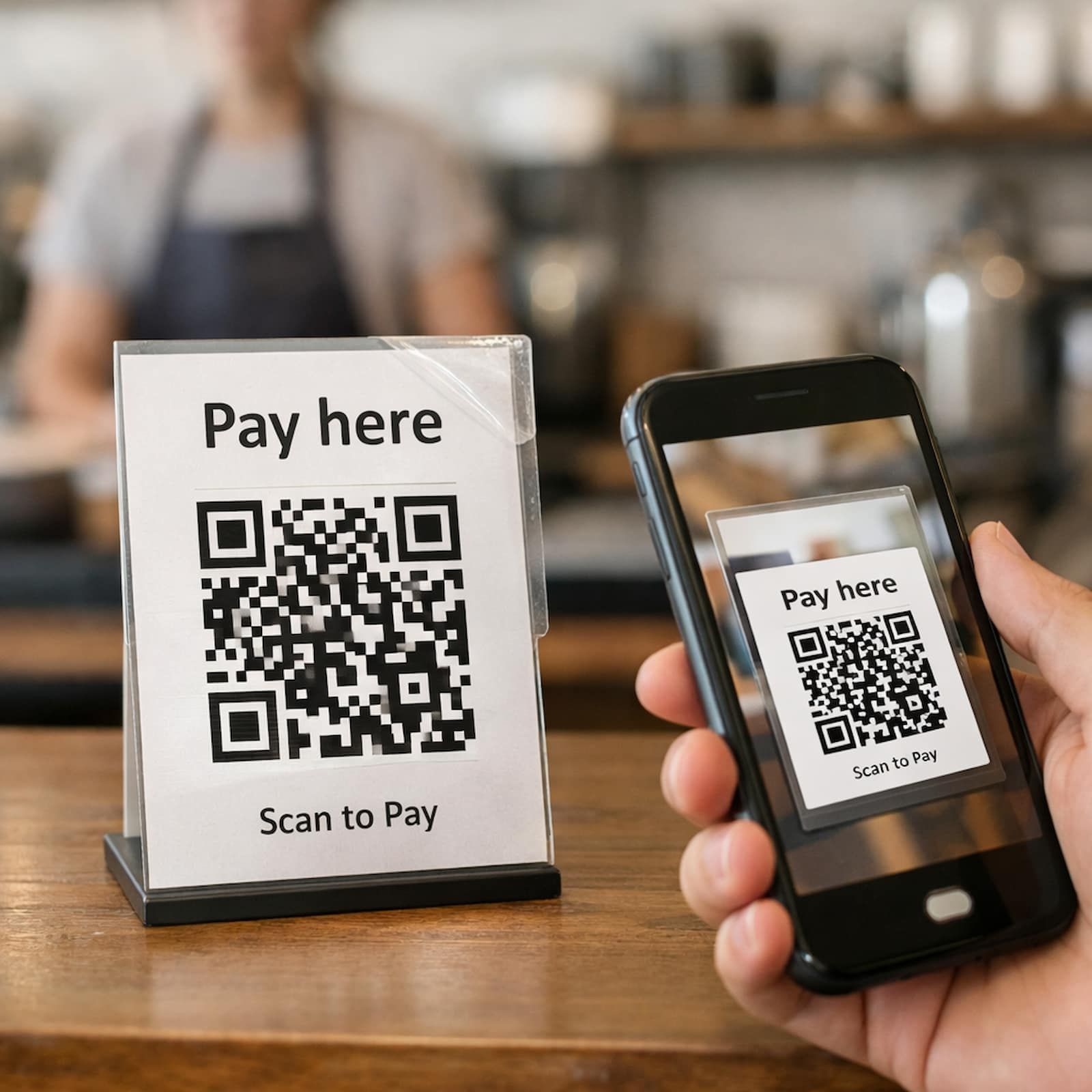
- QR code payment traps (posters, invoices, “support” pages)
- Example cue: “Scan to verify your account,” “scan to cancel subscription”
- Deepfake voice and spoofed caller ID used as confidence accelerators
- Example cue: caller sounds “professional,” knows your name, and pushes you to act now
“Trust me bro” is not a security control.
Micro-scenario 1 (individual): 7 minutes, $1,980, and the “helpful” bank caller
- Timeline: 9:12 AM text → 9:14 AM call → 9:19 AM transfer sent
- Amount: $1,980 instant transfer
- What went wrong (root cause): The victim authenticated a real payment in a real app while being coached live. Authentication happened. Verification did not.
- Loss prevention lesson: Any caller who keeps you on the phone while you move money is not preventing fraud. They are directing it.
Micro-scenario 2 (SMB): fake invoice + mobile approval = $14,750 gone before lunch
- Timeline: Monday 10:05 AM email invoice → 10:11 AM “vendor” call → 10:18 AM new payee added → 10:22 AM payment approved on mobile
- Amount: $14,750
- What went wrong (root cause): No second approver for new payees, no out-of-band verification, and mobile approvals allowed for first-time beneficiaries.
- Loss prevention lesson: “Fast approvals” are a feature. Fraud uses features.
Detection signs
Detection is not just “red flags.” It is recognizing control failure in progress.
The scammer does not need your password. The scammer needs your pace.
The high-signal detection checklist
- You are being timed.
- Cue: “You have 10 minutes,” “before it posts,” “while I have you”
- You are being isolated.
- Cue: “Do not tell anyone,” “do not call the bank, this is internal”
- You are being coached inside your own app.
- Cue: “Open your banking app. Go to Transfers. Add a payee.”
- The “fix” involves moving money.
- Cue: “Move funds to protect them” is the scam. Full stop.
- The request bypasses normal process.
- Cue: invoice change without a purchase order, payee change without a new contract, refund to a new account
Decision tree
- If a payment request changes the destination (new payee, new wallet, new bank details) →
- Then: freeze action and verify out-of-band using a known number or known contact method.
- If a caller pressures you to stay on the line while you transact →
- Then: hang up. Call the institution using the number on the back of the card or inside the official app.
- If you see a new device login OR a password reset you did not start →
- Then: lock account access, change credentials from a clean device, and notify the bank immediately.
- If your confirmation metric falls below threshold → Take action:
- Metric: “Can I verify the request using a second channel I control?”
- Threshold: If verification confidence is below 90 percent, do not pay. Escalate internally or to the bank.
(SMB threshold): If any payment above $500 involves a new payee, require dual approval plus vendor call-back to a previously saved phone number.
Prevention steps
Prevention is boring. That is why it works. Fraud hates friction that you control.
Controls that actually reduce losses (individuals)
- Set transfer limits and alerts.
- Example: daily outbound limit of $500 for instant transfers, plus alerts for “new payee added.”
- Disable high-risk rails you do not use.
- Example: if you never send instant transfers, turn them off where possible.
- Use a “pause phrase.”
- Example script: “I will call back using a verified number. Goodbye.”
- Separate recovery channels.
- Example: keep your bank login recovery email on a different device than your phone.
After the first 100 words, here is the part scammers hate: accountability.
If you want the legal and recovery boundaries for instant bank-to-bank scams, read this breakdown of Zelle refund rules and where protections stop: https://dollarvigil.com/zelle-scam-reimbursement-law-2026-what-banks-must-pay
Controls that actually reduce losses (small businesses)
Prevention difference: individuals vs SMBs (why SMBs get hit harder):
Individuals get targeted for speed. SMBs get targeted for process gaps. A scammer does not need your CFO’s soul. The scammer needs one rushed approval path.
- New payee controls (non-negotiable).
- Example: first payment to any new payee must be approved on desktop, not mobile, with a second approver.
- Invoice change verification.
- Example: any bank detail change requires call-back to a previously saved contact, not the email thread.
- Role-based permissions.
- Example: staff can create payments, but only a separate role can release payments.
- Fraud monitoring with measurable rules.
- Example: alerts for “new payee + first payment + urgent note” as a high-risk pattern.
If you run an SMB and want the tool and workflow angle (without vendor fairy tales), this buyer-focused guide on fraud detection software for small businesses is the closest fit: https://dollarvigil.com/top-fraud-detection-software-for-small-businesses-2026
Comparison table: scam patterns vs the control that blocks them
| 2026 scam pattern | What the scammer needs | Detection signal | Control that blocks loss | Owner (person / SMB) |
|---|---|---|---|---|
| “Safe account” transfer coaching | You to approve a transfer | Caller stays on line while you transact | Hang up + call back via known number; bank note on account | Both |
| New payee added under pressure | You to add beneficiary | New payee + urgency | Dual approval for new payees; cooling-off period | SMB |
| QR code “verify/cancel” | You to scan and sign in | QR leads to login | Only scan from trusted sources; type official URLs | Both |
| SIM swap chain | Control of your number | Loss of service + reset prompts | Carrier PIN; bank “no changes without branch/ID” flag | Both |
| Fake invoice + callback hijack | You to accept changed bank details | Email thread suddenly “updated details” | Call-back to saved contact; vendor verification checklist | SMB |
Most scam “innovation” is just your policy gap wearing a new hat.
What to do if affected
You need a plan that works when your heart rate is high. Here it is.
⏱️24-hour rapid action plan (use this as your checklist)
- Stop additional outflow: freeze transfers, remove unknown payees, disable instant rails where possible.
- Call the bank or payment provider now: ask for a payment recall and a fraud case number.
- Document evidence: screenshots of transaction details, payee info, chat logs, call times, numbers, emails, QR landing pages.
- Secure accounts: change passwords from a clean device, enable MFA, check for new devices, remove suspicious recovery methods.
- File reports (as applicable):
- US: FBI IC3, FTC report portal
- UK: Action Fraud
- CA: Canadian Anti-Fraud Centre
- AU: Scamwatch
- NZ: Netsafe or local reporting pathways
- Escalate inside your business: notify leadership, lock approvals, and preserve logs for audit.
- Dispute where valid: cards may allow chargebacks; bank transfers usually do not. Ask anyway, but do not assume.
Escalation framework (who to push, and what to ask for)
Level 1: Frontline support
- Ask for: fraud case number, recall attempt, account security review, written summary of what they will do next.
Level 2: Bank fraud team or disputes team
- Ask for: transfer trace, beneficiary bank details (where permitted), internal notes, timestamps, and whether they can issue a “hold harmless” while they investigate.
Level 3: Formal complaint channel
- Ask for: complaint reference number, response timeline, and the exact policy basis for denial in writing.
Level 4: Regulator or ombuds pathway (region-specific)
- Ask for: documented decision trail and evidence standards used to deny reimbursement.
Litigation exposure paragraph (business reality):
If you are an SMB, a mobile-payment fraud incident can become a cost stack: customer disputes, partner de-risking, and payment processor scrutiny. Complaints create paper trails. Paper trails create questions. Questions create contract changes, reserve holds, and sometimes legal disputes. “One scam” can turn into months of friction and lost revenue.
Chargeback vs bank transfer
- Card chargeback: you can dispute through the card network rules. It is not guaranteed, but there is a defined pathway.
- Bank transfer / instant transfer: once authorized and sent, money often moves fast and final. Recovery depends on recall speed, receiving bank cooperation, and the scammer not cashing out.
What banks will not tell you directly
Banks will say “we take fraud seriously.” That sentence is free.
Here is the paid version:
- If you approved it, you may be treated as the author. Even when you were manipulated.
- The system is optimized for finality, not feelings. Instant rails are built to move money fast, not to debate intent.
- The first 60 minutes matter more than the first 60 emails. Recall attempts are time-sensitive.
- Your documentation changes outcomes. A clean timeline and screenshots can turn a hand-wave denial into a structured review.
Hard Truth:
The scammer’s favorite security feature is your ability to follow instructions.
Myth vs reality
- Myth: “If it is in my banking app, it is safe.”
- Reality: Your app is safe. Your decision can be unsafe under pressure.
- Myth: “A one-time passcode means the bank verified the transaction.”
- Reality: It verifies access. It does not verify intent.
- Myth: “Caller ID proves who called.”
- Reality: Caller ID is a costume, not an ID badge.
Read This Twice: Any “security process” that requires you to move money is not security. It is laundering with better grammar.
Psychology neutralization: how they hijack your brain, and how to stop it
Trigger used: urgency + authority + isolation.
Why it works: it narrows attention, blocks second opinions, and turns compliance into a reflex.
How to neutralize it (practical):
- Create a rule: “No payments while on a call with an inbound number.”
- Use a forced pause: put the phone down for 60 seconds. Breathe. Then verify.
- Switch channels: if the request came via SMS, verify via official app support. If it came via email, verify via a known number.
- Say the words out loud: “I am being pressured to move money.” Hearing it breaks the spell.
If You Remember Only One Thing: You are allowed to slow down. Fraud is allergic to calm verification.
Screenshot checklist
- Transaction ID, amount, date/time, payee details
- New payee creation screen (if applicable)
- Any “new device” or “password reset” alerts
- Caller number, call time, voicemail, and SMS threads
- Email headers (for SMB invoice scams)
- QR code landing page URL and screenshots
- Bank chat transcripts and case numbers
FAQs
What are the biggest mobile payment scam trends in 2026?
The fastest-growing patterns involve impersonation plus forced approvals. “Safe account” transfers, new payee setups under pressure, and QR code traps show up repeatedly because they turn your real app into a scammer-controlled workflow.
Why do banks deny refunds when I was clearly scammed?
Many payment rails treat approved transfers as authorized, even if manipulation occurred. Policies differ, and outcomes depend on facts, timing, and documentation. Always file a case and demand a written explanation. Do not assume the first answer is final.
What is the single best loss-prevention move for mobile payment scams?
Out-of-band verification. Hang up. Call back using a verified number. Confirm using a second channel you control. If you cannot verify, you do not pay.
Are QR code payment scams increasing?
Yes. QR codes reduce friction and hide the destination until you are already committed. Only scan codes from trusted sources, and when in doubt, type the official URL manually.
How should small businesses prevent mobile payment losses?
Treat new payees and changed bank details as high-risk events. Require dual approval, call-back verification to saved contacts, and a cooling-off period for first payments. Remove mobile release authority for first-time beneficiaries.
What should I do in the first hour after sending money to a scammer?
Start the 24-hour plan immediately. Call the bank for a recall, document evidence, secure accounts, and file reports. Speed matters more than perfect wording.
Does using MFA stop mobile payment scams?
It helps against account takeover, but it does not stop social engineering. Scammers can manipulate people into approving MFA prompts and payments. MFA is necessary. It is not sufficient.
Should I pay a “recovery service” that promises to get my money back?
Be extremely cautious. Many “recovery” offers are follow-on scams. Use official channels first: your bank, regulator complaint pathways, and law enforcement reporting portals.
Conclusion
Mobile payment scams in 2026 are not smarter than you. They are faster than your verification habits.
Scammers run the same play every day: “Act now, stay quiet, follow steps.” It is the world’s least original script, performed by people who think caller ID is a personality.
A scammer’s business plan is your hurry wearing a fake badge.
If you feel rushed, stop. Verify out-of-band. If you cannot verify, do not pay.
Disclaimer: This article provides general fraud prevention and loss prevention information for 2026 and is not legal advice, financial advice, or a guarantee of reimbursement. Banks, payment providers, and consumer protection pathways vary by country, account type, and transaction facts. If money moved, act quickly, document everything, and contact your bank and relevant reporting bodies immediately.