Chargeback Fraud Prevention Systems for Ecommerce: The Merchant's Guide
A practical merchant focused guide to ecommerce chargeback fraud prevention systems, covering risk detection, dispute management, fraud scoring, and payment security layers to reduce losses and false chargebacks.

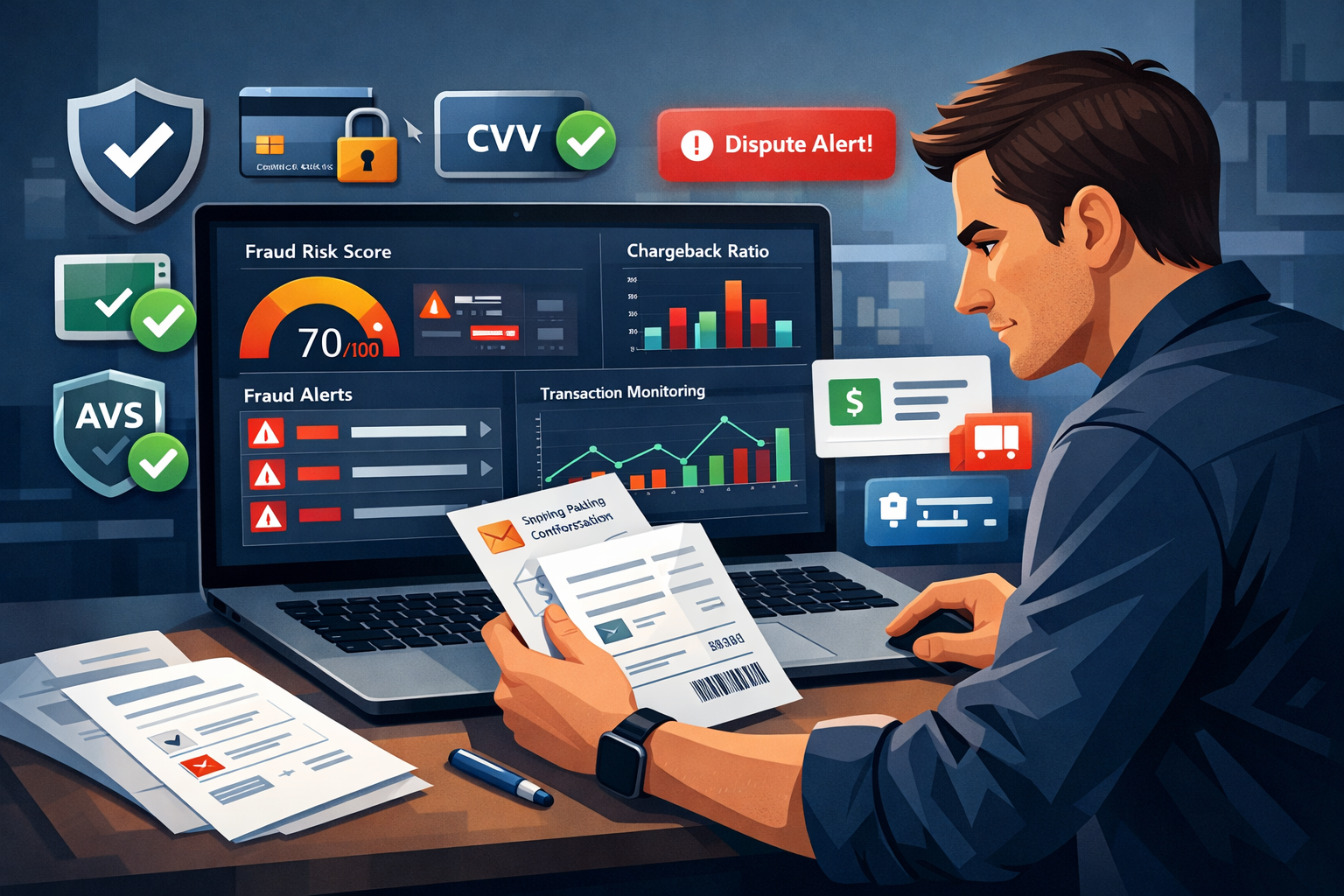
Complete guide to chargeback fraud prevention for ecommerce businesses. Learn detection systems, friendly fraud tactics, and protection strategies.
TL;DR: Chargeback fraud costs ecommerce merchants billions annually through legitimate disputes, friendly fraud, and criminal schemes. Effective prevention combines fraud detection tools, clear policies, transaction monitoring, and rapid response systems.
What Is Chargeback Fraud Prevention Really About?
Chargeback fraud prevention is the combination of technology, policies, and processes that stop customers from reversing legitimate transactions or criminals from exploiting the dispute system. Prevention focuses on three targets: blocking fraudulent orders before fulfillment, documenting legitimate transactions thoroughly, and responding to disputes with evidence that wins. Recovery after a chargeback is limited. Banks side with cardholders 70-80% of the time, and even when you win, you lose processing time and dispute fees.
Introduction
You know that moment when you refresh your merchant dashboard and see three new chargebacks filed overnight?
That stomach-drop feeling when you realize the "customer" who ordered six laptops with overnight shipping has filed a dispute claiming they never authorized the purchase. The products are gone. The money is gone. And now you are paying a $25 dispute fee on top of it.
We have all been there. Staring at the screen. Wondering if maybe the payment processor made a mistake. Hoping the bank will see reason. Refreshing the dispute portal like it is going to change the outcome.
It will not.
Here is what actually happens: You lose the product. You lose the payment. You lose the dispute fee. And if this keeps happening, you lose your payment processing account entirely when your chargeback ratio crosses 1%. Then you are in the high-risk processor wasteland paying 5-8% transaction fees instead of 2.9%.
This is not a recovery guide. There is no recovering from most chargebacks once they hit your account. This is a prevention guide, because prevention is the only strategy that actually works.
Dollar Vigil is an educational fraud-prevention resource. We are here to explain how chargeback fraud actually operates, why the system is built to bleed merchants dry, and what you can do to stop the bleeding before it costs you your business.
What Actually Happened: How Chargeback Fraud Works
Chargeback fraud comes in three flavors, and they all taste terrible.
Criminal Fraud: The Stolen Card Classic
Someone steals a credit card number. They test it on your site with a small purchase. It works. Then they come back and order everything expensive you sell, using a freight forwarder address or a vacant house. You ship it. Three weeks later, the real cardholder notices and files a fraud claim. The bank reverses the charge. You are out the product and the money.
The scammer knew exactly what they were doing. They knew the real cardholder would spot it eventually. They knew you would lose the dispute. They planned for this. You were the target from the first test transaction.
Friendly Fraud: The Customer Who "Forgot"
This one is special. A legitimate customer makes a legitimate purchase with their own card. Then 60 days later, they see the charge and think, "I do not remember this." Instead of contacting you, they file a chargeback. Or they do remember, but they decided they did not want it anymore, and filing a chargeback is easier than dealing with your return policy.
The bank does not care that you have proof of delivery. The bank does not care that the customer used the product for two months. The cardholder said they did not recognize it, so the bank reversed it. You just gave away free products to someone who knew exactly what they were doing.
This is called "friendly fraud," but there is nothing friendly about it. It is theft with a customer service smile.
Chargeback Abuse: The Serial Disputer
Then there are the professionals. People who have figured out that chargebacks are easier than shoplifting and harder to prosecute. They order high-value items, wait for delivery, file a chargeback claiming the box was empty or the item was damaged, and keep both the product and the refund.
They know the system. They know you have 7-10 days to respond. They know most merchants do not keep great records. They know banks default to siding with cardholders. They have done this 30 times this year across 30 different stores.
They are not customers. They are professional thieves using the dispute system as a weapon.
Why This Feels So Bad
Here is the thing about chargeback fraud: it makes you feel stupid even though you did nothing wrong.
You followed the rules. You verified the address. You shipped to the confirmed address. You have tracking showing delivery. And you still lost.
That freeze response you are feeling? That is your brain trying to process a system that punishes you for following the rules. It is normal. We all go through it the first time we realize the payment system is designed to protect cardholders at the expense of merchants.
You are not stupid for getting hit with chargebacks. You are operating in a system where the card networks decided that merchant losses are acceptable collateral damage in the fight against fraud. They would rather you eat the loss than risk a cardholder closing their credit card account.
Your brain goes offline because this does not make logical sense. How can someone steal your product, keep your product, get their money back, and face zero consequences? How is that legal?
It is legal because the card networks wrote the rules. And they wrote them to protect their real customers, which are the cardholders, not you.
The Moment Money Leaves: What Finality Looks Like
Let us be very clear about what happens when a chargeback is filed.
Credit Card Chargebacks
The customer disputes the charge. The bank immediately reverses it. The money leaves your account within 24-48 hours. You now have 7-10 days to submit evidence proving the transaction was legitimate.
If you win, the money comes back in 30-60 days. If you lose, the money is gone, you pay a dispute fee, and the chargeback counts against your ratio. If your ratio hits 1%, payment processors start threatening to drop you.
No, you cannot call the bank and explain. No, talking to the customer does not matter. No, proof of delivery does not guarantee you will win. The bank has already reversed the charge. You are fighting to get it back, not fighting to keep it.
The money left faster than your last successful sale processed.
Debit Card Chargebacks
Same process, worse outcome. Debit card chargebacks are harder to fight because cardholders have stronger legal protections under Regulation E. Banks side with debit cardholders even more aggressively than credit cardholders.
You have the same evidence requirements but lower win rates. Merchants win about 20% of debit card disputes compared to 30% of credit card disputes.
The bank does not have magic dispute-reversal powers for merchants. They have them for cardholders.
Digital Wallet Chargebacks
PayPal, Venmo, Apple Pay, Google Pay. These all connect back to credit cards or bank accounts, which means they all support chargebacks. The wallet provider will investigate first, but if the cardholder escalates to their bank, you are back in the same chargeback process.
Some wallet providers offer seller protection, but the requirements are so specific that most merchants do not qualify. Wrong shipping carrier? Not covered. Signature not required? Not covered. Digital goods? Never covered.
The wallet shows the transaction as complete, but that is not the same as final. Nothing is final until the dispute window closes 120 days later.
What You Can Still Control: Prevention Systems That Actually Work
Here is the good news: chargeback fraud is preventable. Not 100%, but you can cut your chargeback rate by 60-80% with the right systems.
Fraud Detection Before Fulfillment
This is your first line of defense and your most important one. Every order gets screened before you ship it.
Address Verification Service (AVS): This checks if the billing address provided matches the address on file with the card issuer. If it does not match, you decline the order or request manual verification. AVS catches about 30% of fraudulent orders.
Card Verification Value (CVV): The three-digit code on the back of the card. If the customer cannot provide it, they do not have the physical card. Require CVV for every transaction. No exceptions.
IP Geolocation: Where is the order coming from? If the billing address is in Ohio but the IP address is in Nigeria, that is a red flag. If the IP is a known proxy or VPN, that is a bigger red flag.
Email Verification: Is the email address real? How old is it? Was it created three hours before placing this $2,000 order? Free email domains (Gmail, Yahoo, Outlook) are higher risk than business domains for high-value orders.
Velocity Checks: Is this the same card trying to make six purchases in ten minutes? Is this IP address placing orders at five different stores? Velocity checks catch criminals testing cards across multiple merchants.
Device Fingerprinting: This identifies the computer, phone, or tablet placing the order. If the same device is linked to 15 chargebacks at other stores, you decline the order.
Tools like Stripe Radar, Signifyd, Kount, and Riskified automate all of this. They analyze hundreds of data points per transaction and give you a fraud score. You set the threshold. Anything above your risk tolerance gets flagged for manual review or automatic decline.
The cost is usually 0.05-0.15% per transaction. Chargebacks cost you 100% of the transaction plus fees. The math is not complicated.
Transaction Documentation
You cannot win a dispute without evidence. The bank wants proof that the transaction was legitimate and the customer received what they paid for.
Save Everything: Order confirmation emails. Shipping confirmations. Tracking numbers. Delivery confirmations. Photos of the packaged item. Customer service conversations. Everything.
Require Signatures for High-Value Orders: Anything over $250 should require signature confirmation. It costs $3-5 extra but proves someone at that address accepted the package. No signature means the customer can claim it never arrived.
Use Tracking with Delivery Confirmation: Basic tracking is not enough. You need delivery confirmation showing the package was received. Screenshot the tracking page the day delivery is confirmed and save it.
Keep IP Logs: Save the IP address, device information, and timestamp for every transaction. This proves the customer was using their device at their location when they placed the order.
Save Communication: Every email, chat message, or phone call with the customer gets saved. If they confirmed the order, thanked you for fast shipping, or asked when it would arrive, that proves they knew about the purchase.
Clear Policies and Communication
Half of friendly fraud happens because customers do not recognize the charge. The other half happens because customers do not want to deal with your return process.
Descriptor Management: The charge description on their credit card statement needs to match your business name exactly. If your store is "TechDeals Store" but the charge shows up as "TD Merchant Services LLC," customers will dispute it as fraud. Work with your payment processor to set a clear descriptor.
Confirmation Emails: Send an immediate order confirmation with your business name, what they bought, how much they paid, and when it will arrive. Include your contact information. Make it impossible for them to claim they do not remember the purchase.
Shipping Notifications: Send tracking information as soon as the order ships. Include the tracking link. Tell them when to expect delivery. Send a delivery confirmation when it arrives.
Return Policy: Make your return policy clear, fair, and easy to find. Include it in order confirmations. Make the process simple. Customers who think returns are impossible will file chargebacks instead.
Refund Policy: Process refunds quickly. The longer a customer waits for a refund, the more likely they are to file a chargeback. If you promise 5-7 business days, deliver in 3.
Rapid Response to Disputes
When a chargeback hits, you have 7-10 days to respond. Not business days. Days.
Respond to Every Chargeback: Even if you think you will lose. Every response you submit trains the system that you take disputes seriously. Ignoring chargebacks guarantees losses and increases your chargeback ratio.
Provide Compelling Evidence: The bank wants proof, not explanations. Submit tracking showing delivery to the cardholder's address. Submit signed delivery confirmation. Submit order confirmations showing the customer's IP address matching their billing address. Submit communication proving the customer knew about the order.
Address the Reason Code: Chargebacks come with reason codes explaining why the customer disputed. "Fraudulent transaction" requires different evidence than "product not received." Read the reason code and respond specifically to it.
Use Chargeback Management Tools: Services like Chargebacks911, Verifi, and Ethoca automate responses and improve win rates. They cost money but win disputes you would otherwise lose.
Recovery Timeline: What Happens After the Hit
Let us set expectations.
Week One: The Dispute Is Filed
The bank reverses the charge immediately. You receive notification. The money is already gone from your account. You have 7-10 days to respond with evidence.
This is not the investigation phase. This is the evidence collection phase. The bank has already sided with the cardholder. You are fighting to reverse that decision.
Week Two: You Submit Evidence
You gather everything. Order confirmation. Shipping tracking. Delivery confirmation. IP logs. Communication history. Terms of service. Refund policy. Everything that proves this was a legitimate transaction and the customer received what they paid for.
You submit it through your payment processor's portal. You wait.
Week Four to Six: The Bank Reviews
The bank reviews your evidence. They do not call you. They do not ask follow-up questions. They read what you submitted and decide.
If you win, the money is returned to your account. If you lose, the chargeback stands, you pay the dispute fee ($15-25), and the chargeback counts against your ratio.
You do not get to argue. You do not get a phone call. You get an email with the decision.
Month Three to Four: Pre-Arbitration (If You Fight)
If you lose and believe you should have won, you can escalate to pre-arbitration. This costs $250-500 and has about a 10% success rate. Most merchants do not bother unless the transaction amount justifies the cost and they have overwhelming evidence.
If you lose pre-arbitration, you can escalate to arbitration. This costs $500-1,000 and has about a 5% success rate. This is reserved for cases where thousands of dollars are at stake and the customer clearly committed fraud.
The Real Timeline
Most disputes are decided in 30-45 days. If you win, you get the money back. If you lose, the money is gone forever, and you paid fees for the privilege of losing.
There is no appeals process beyond pre-arbitration and arbitration. There is no customer service number to call. This is the system. It does not care about fairness. It cares about protecting cardholders.
Recovery Scams: Yes, They Exist for Merchants Too
Here is where it gets darker.
You have been hit with chargebacks. You are frustrated. You are losing money. You are searching online for solutions.
Then someone contacts you. Maybe it is an email. Maybe it is a LinkedIn message. Maybe it is a cold call.
They say they are a chargeback recovery specialist. They can get your money back. They have connections at the card networks. They know which evidence banks actually read. They have a 90% success rate. They just need an upfront fee or a percentage of recovered funds.
This is a scam.
Let me be very clear: There are legitimate chargeback management services. Chargebacks911, Verifi, Ethoca, Kount. These are real companies that help merchants fight disputes. They integrate with payment processors. They automate evidence submission. They improve win rates by 10-20%.
But they do not contact you out of nowhere. They do not promise 90% success rates. They do not ask for upfront fees before seeing your case. And they definitely do not claim to have "connections" at card networks.
How Merchant Recovery Scams Work
The scammer finds your business online. Maybe you posted in a forum about chargebacks. Maybe you left a review complaining about your payment processor. Maybe they bought a list of merchants with high chargeback rates.
They reach out with a solution. They sound professional. They have a website. They might even have fake testimonials or fake case studies.
They ask for detailed information about your chargebacks. Amounts. Reason codes. Customer details. This information is valuable to fraudsters because it teaches them how to commit more fraud.
Then they ask for payment. Maybe it is an upfront "retainer" of $500-2,000. Maybe it is "20% of recovered funds" paid upfront. Maybe they ask for access to your payment processor account "to file disputes directly."
You pay. They disappear. Or they file garbage disputes that get rejected immediately. Or they actually do file disputes, but with terrible evidence that guarantees you lose.
You lost money to chargebacks. Now you lost more money to a scam promising to recover money from chargebacks. This is the same psychology as crypto recovery scams or bank transfer recovery scams. You are vulnerable, frustrated, and searching for solutions. Scammers know this.
Red Flags for Chargeback Recovery Scams
Unsolicited Contact: Legitimate services do not cold call or cold email merchants. You find them, not the other way around.
Guaranteed Recovery: No one can guarantee chargeback recovery. Banks decide disputes based on evidence and reason codes. A 90% success rate is impossible because some reason codes are unwinnable.
Upfront Fees Before Review: Legitimate services review your case first, then quote you a price based on the likelihood of winning. Scammers ask for money before doing anything.
Requesting Payment Processor Access: Never give anyone access to your payment processing account. Ever. Legitimate services work through APIs or evidence portals, not by logging in as you.
Vague Explanations: If they cannot clearly explain how they will fight your disputes, what evidence they will submit, and what their success rate is for your specific reason codes, they are scamming you.
Payment by Wire Transfer or Crypto: Legitimate businesses accept credit cards or ACH. Scammers want untraceable payment methods.
What to Do Instead
Use established chargeback management platforms. Chargebacks911 has been operating since 2011. Verifi is owned by Visa. Ethoca is owned by Mastercard. Signifyd has handled billions in transactions. These companies are real and they work.
If you are being targeted by chargeback fraud repeatedly, the solution is not recovery. The solution is prevention. You need better fraud detection, better documentation, and better dispute response processes.
Talk to your payment processor about chargeback alerts. Verifi and Ethoca offer alert systems where you are notified before the chargeback is filed, giving you a chance to issue a refund instead. A refund costs you less than a chargeback.
Do not fall for recovery scams. The money from chargebacks is gone. The only money you can protect is the money from future transactions by preventing future chargebacks.
Detection and Prevention: Building a Real Defense System
Prevention is not a single tool. It is a system. Here is how to build one that actually works.
Layer One: Pre-Transaction Screening
Before the customer even completes checkout, you are screening for risk.
3D Secure 2.0: This adds an authentication step where the customer verifies their identity with their bank using a password, biometric, or one-time code. It shifts fraud liability from you to the bank. If the customer passes 3D Secure authentication and later files a chargeback claiming fraud, you win automatically.
The downside is friction. Adding extra steps at checkout reduces conversion rates by 10-20%. The upside is those conversions are legitimate customers, not fraudsters.
Use 3D Secure selectively. Trigger it for high-value orders, new customers, or transactions flagged as medium-to-high risk. Do not force it on every transaction unless your chargeback rate is already critical.
Fraud Scoring Tools: Every transaction gets a risk score based on hundreds of factors. Device fingerprint. IP reputation. Email age. Billing and shipping address match. Order velocity. Purchase patterns.
Stripe Radar, Signifyd, and Riskified analyze this in real-time and give you a score. You set the rules. Maybe anything above 70/100 gets declined automatically. Anything between 50-70 goes to manual review. Anything below 50 processes automatically.
These tools cost 5-15 cents per transaction. That is 0.2-0.5% on a $30 order. Chargebacks cost you 100% plus fees. Use the tools.
Layer Two: Order Fulfillment Controls
The order passed screening. Now you are fulfilling it.
Shipping Address Verification: Does the shipping address match the billing address? If not, why? Freight forwarders and package forwarding services are high-risk. Vacant lots are high-risk. Addresses flagged in fraud databases are high-risk.
For high-value orders to non-matching addresses, require phone verification. Call the customer and confirm they authorized the order. Yes, this takes time. It also stops fraud.
Delivery Requirements: Require signature confirmation for anything over $250. Require age verification for restricted products. Use carriers that provide GPS delivery confirmation.
These options cost extra. They also provide evidence you need to win disputes.
Fulfillment Delays for Risky Orders: High-risk orders get a 24-hour delay before shipping. This gives the real cardholder time to notice the fraudulent charge and contact their bank before you ship the product.
You might lose some legitimate customers who want immediate shipping. You will lose more money shipping products to fraudsters.
Layer Three: Post-Transaction Monitoring
The order shipped. Your job is not done.
Chargeback Alerts: Verifi and Ethoca provide alert systems where you are notified when a customer contacts their bank to dispute a charge, before the chargeback is officially filed. You have 24-72 hours to issue a refund instead.
A refund costs you the product and the payment, but not the chargeback fee or the hit to your chargeback ratio. If your ratio is approaching 1%, preventing chargebacks with refunds is worth it.
Customer Communication: Proactive communication reduces friendly fraud. Send shipping updates. Send delivery confirmations. Send post-purchase emails asking if everything arrived okay.
Customers who feel informed are less likely to file disputes.
Fraud Pattern Analysis: Review your chargebacks monthly. What patterns emerge? Same IP addresses? Same shipping addresses? Same products? Same reason codes?
If you are seeing repeated chargebacks for the same product, maybe that product has quality issues. If you are seeing repeated chargebacks to the same region, maybe you need to block that region. If you are seeing repeated "item not received" claims, maybe your shipping carrier is unreliable.
Data tells you where your prevention system is failing. Fix those gaps.
Layer Four: Dispute Response Automation
Chargebacks will still happen. Your response determines whether you lose 100% or recover some.
Automated Evidence Gathering: Chargeback management tools automatically pull order confirmations, tracking information, delivery confirmation, IP logs, and customer communication when a dispute is filed. This gets submitted to the bank within 24 hours.
Speed matters. Banks give you 7-10 days, but disputes submitted faster have higher win rates.
Reason Code-Specific Responses: The evidence you submit depends on the chargeback reason code. "Fraud" requires different evidence than "product not received" or "product not as described."
Automated systems match evidence to reason codes. This improves win rates by 15-20% compared to manual submissions.
Pre-Arbitration Decisions: If you lose a dispute and believe you should have won, the software calculates whether pre-arbitration is worth pursuing based on transaction amount, evidence strength, and reason code.
Pre-arbitration costs $250-500. Do not pursue it unless you have a strong case and enough money at stake to justify the cost.
Why Sharing Fraud Patterns Helps Stop Scams
Here is something most merchants do not realize: fraudsters reuse tactics across multiple stores.
When you share information about chargeback fraud patterns, you help other merchants recognize the same scammers before they ship products. Fraud databases track IP addresses, email addresses, physical addresses, and device fingerprints linked to chargebacks and fraud.
This is how fraud detection tools work. Signifyd, Riskified, and Kount maintain databases of millions of transactions. When a fraudster tries to use the same stolen card at your store that they already used at 15 other stores, the system flags it.
But these databases only work if merchants report fraud. If you eat the chargeback quietly and do not report it, the fraudster moves to the next store with no warning flags.
Report every chargeback to your fraud prevention platform. Report every suspicious order, even if you declined it. Report patterns you notice. This data helps everyone.
Fraudsters rely on isolation. They rely on merchants thinking they are the only ones being targeted. They rely on merchants not sharing information. When you share, you break their system.
FAQs
Can I prevent all chargebacks?
No. Legitimate disputes happen. Customers receive damaged products. Shipping carriers lose packages. Subscription charges process after cancellation due to timing issues. Your goal is not zero chargebacks. Your goal is keeping your chargeback ratio below 0.65% for standard processors or 1% for high-risk processors.
What is a chargeback ratio and why does it matter?
Your chargeback ratio is the number of chargebacks divided by total transactions in a month. If you process 1,000 transactions and receive 8 chargebacks, your ratio is 0.8%. Payment processors drop merchants who consistently exceed 1%. Then you are stuck with high-risk processors charging 5-8% transaction fees instead of 2.9%.
What is friendly fraud and how do I fight it?
Friendly fraud is when a legitimate customer disputes a legitimate transaction. Sometimes it is accidental (they do not recognize the charge). Sometimes it is intentional (they want a refund but do not want to deal with your return policy). You fight it with evidence: order confirmation, delivery confirmation, IP logs, and communication proving the customer knew about and received the purchase.
Should I refund to avoid chargebacks?
It depends. If a customer contacts you with a complaint before filing a chargeback, issuing a refund is usually smarter. A refund costs you the sale but not the chargeback fee or the hit to your ratio. If the customer already filed the chargeback, issuing a refund does nothing. The chargeback stands. Fight it with evidence instead.
Do chargeback guarantee services work?
Legitimate chargeback guarantee services (Signifyd, Riskified, ClearSale) approve transactions and cover chargeback losses if fraud occurs. They work, but they cost 0.5-1% per transaction. For high-risk businesses or businesses with tight margins, this can be worth it. For low-risk businesses, basic fraud detection is usually enough.
What if I keep losing chargeback disputes despite having evidence?
You might be submitting the wrong evidence or submitting it incorrectly. Work with a chargeback management service to review your evidence and dispute process. Sometimes the issue is not the evidence itself but how it is formatted or what is emphasized. Banks have specific requirements for evidence formatting.
Can I ban customers who file chargebacks?
Yes. If a customer files a chargeback, especially for a fraudulent reason, you can refuse future orders from that customer. Block their email, billing address, shipping address, and payment method. Most ecommerce platforms allow you to create block lists. Use them.
What are chargeback reason codes?
Reason codes explain why the customer disputed the charge. Common codes include "fraudulent transaction" (someone used a stolen card), "product not received" (customer claims they never got it), "product not as described" (customer claims it did not match your listing), and "duplicate processing" (customer was charged twice). Each reason code requires different evidence to fight.
How long does a chargeback dispute take?
30-60 days from submission to decision. If you escalate to pre-arbitration, add another 30-45 days. If you escalate to arbitration, add another 60-90 days. Most merchants do not escalate beyond the initial dispute because the costs outweigh potential recovery.
What happens if my chargeback ratio is too high?
Payment processors send warnings at 0.65%. At 0.9%, they threaten termination. At 1%, they drop you. Then you need a high-risk processor, which means higher fees, longer fund holds, rolling reserves, and more restrictions. Getting dropped by a processor also makes it harder to get approved by the next one.
For additional context on fraud recovery and prevention tools, see our detailed guide on credit monitoring vs identity theft protection and what actually helps after fraud: Credit Monitoring vs Identity Theft Protection: What Actually Helps After Fraud.
TL;DR
Chargeback fraud costs ecommerce merchants through criminal fraud, friendly fraud, and chargeback abuse. Prevention requires fraud detection tools that screen transactions before fulfillment, strong documentation of legitimate orders, clear communication with customers, and rapid response to disputes with evidence. Tools like AVS, CVV requirements, fraud scoring, 3D Secure, and delivery confirmation cut chargeback rates by 60-80%. Chargebacks cannot be fully recovered once filed. Banks decide disputes based on evidence and side with cardholders 70-80% of the time. Maintain a chargeback ratio below 0.65% to keep standard payment processors. Prevention is the only strategy that protects revenue long-term.
One More Thing: Share This
If you found this guide useful, send it to another merchant.
Not because we need the traffic. Because the merchant in your supplier network, your local business group, or your industry forum is getting destroyed by chargebacks right now and does not know these prevention tactics exist.
They are losing products to friendly fraud. They are shipping to freight forwarders who disappear. They are responding to chargebacks with terrible evidence and wondering why they keep losing. They are one bad month away from getting dropped by their payment processor.
You knowing this information helps you. Other merchants knowing this information helps everyone. Fraud detection databases get stronger when more merchants report fraud patterns. Chargeback abusers get flagged faster when more stores block them. Recovery scammers lose targets when merchants know what legitimate services look like.
The fraudsters already share information. They sell victim lists. They trade working card numbers. They post tutorials on dark web forums about which stores have weak fraud detection.
Merchants need to do the same. Not on forums. Not in secret. Just by sharing practical prevention information that actually works.
Send this guide to someone who needs it. Post it in your merchant group. Forward it to that store owner who just complained about chargebacks eating their margins.
Sharing does not cost you anything. It might save someone's business.